




Description
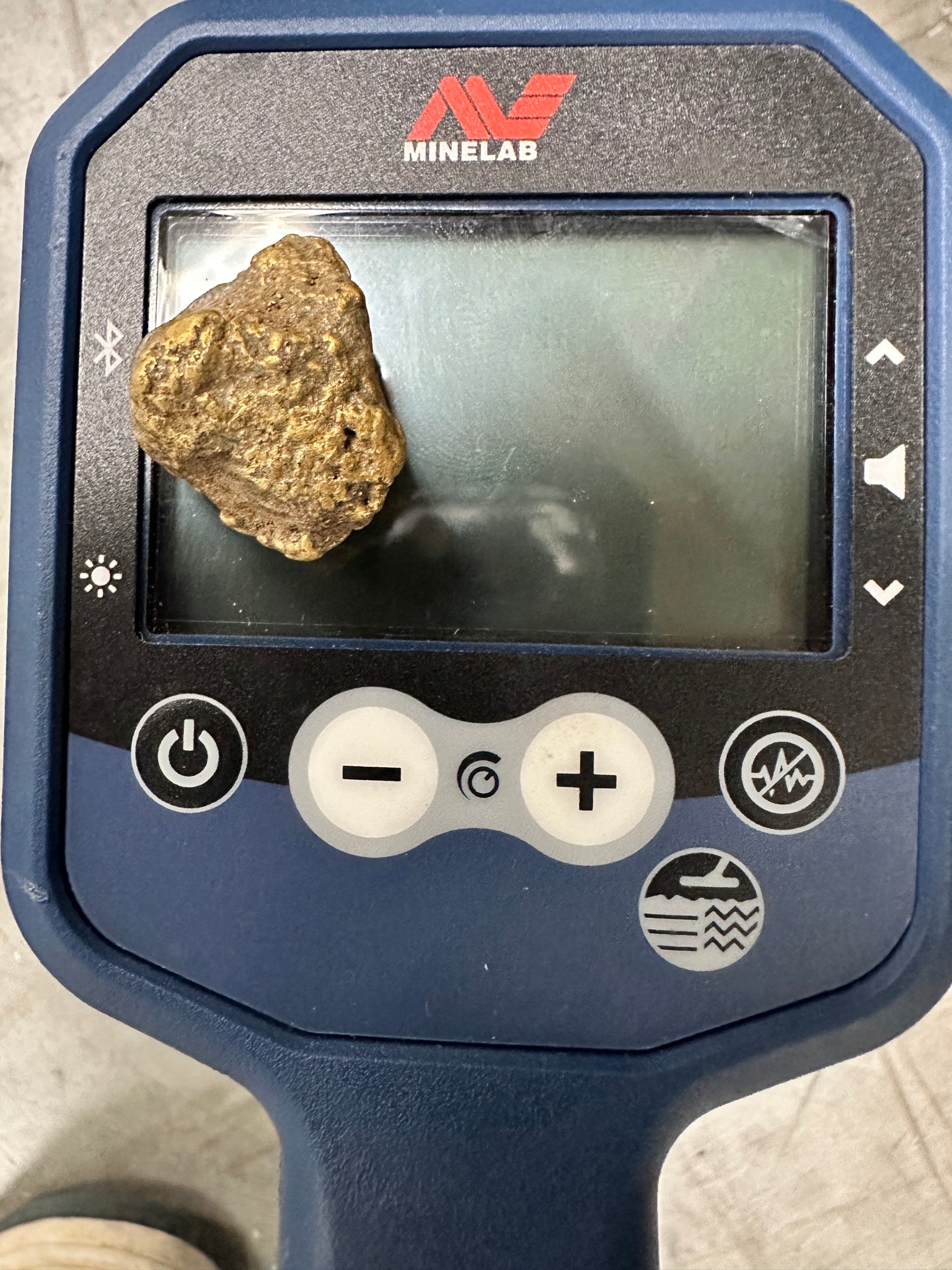
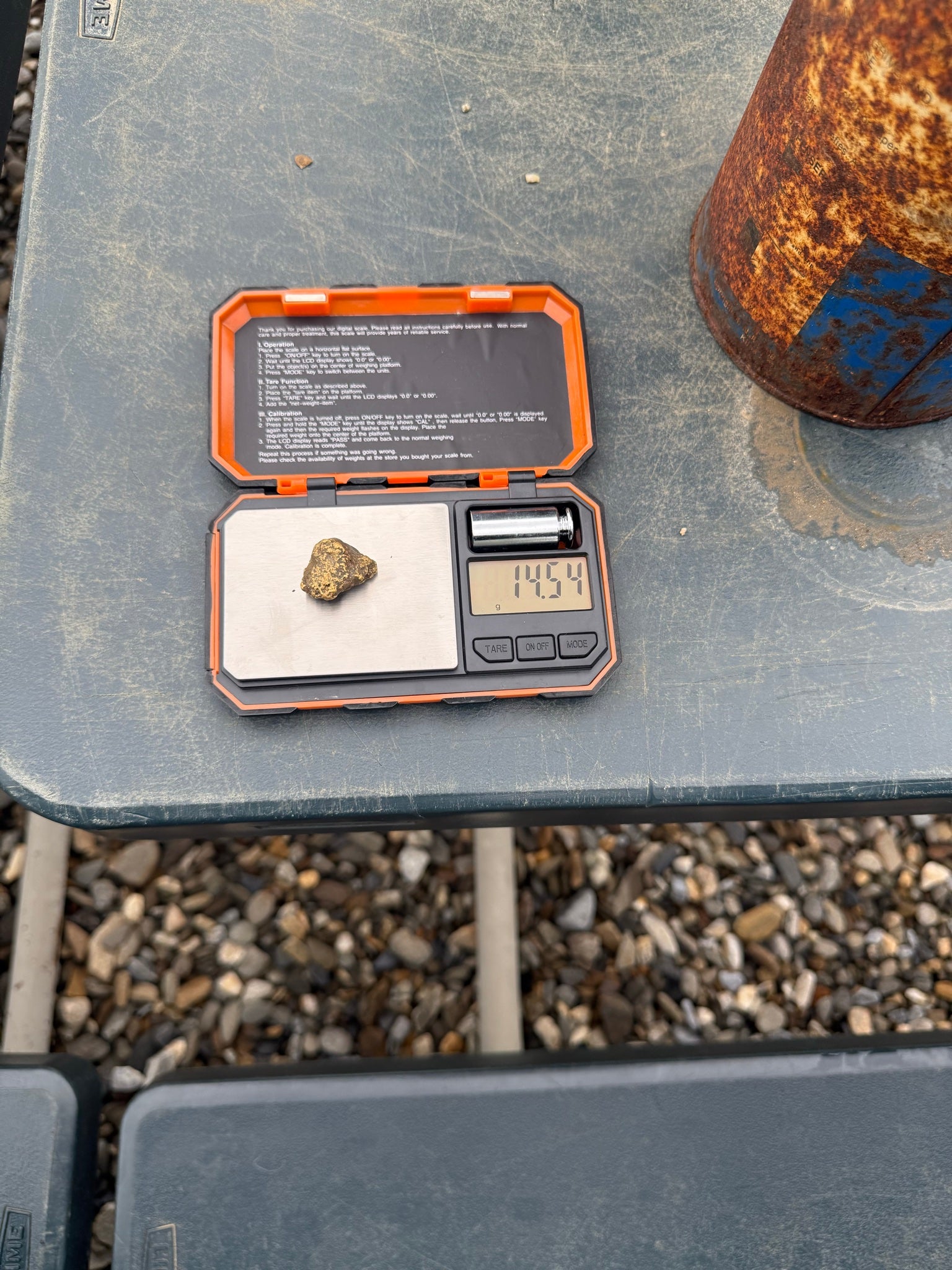
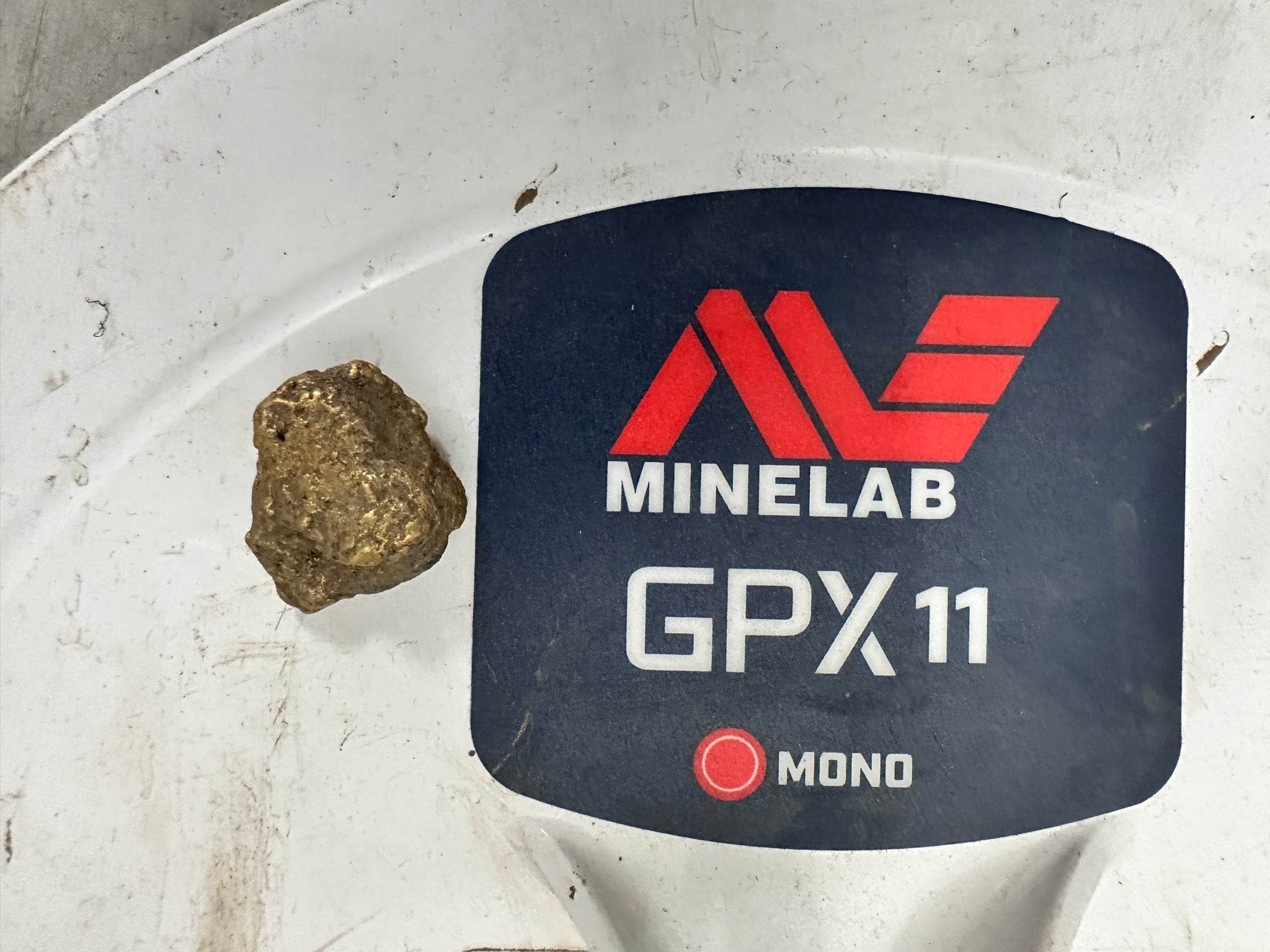
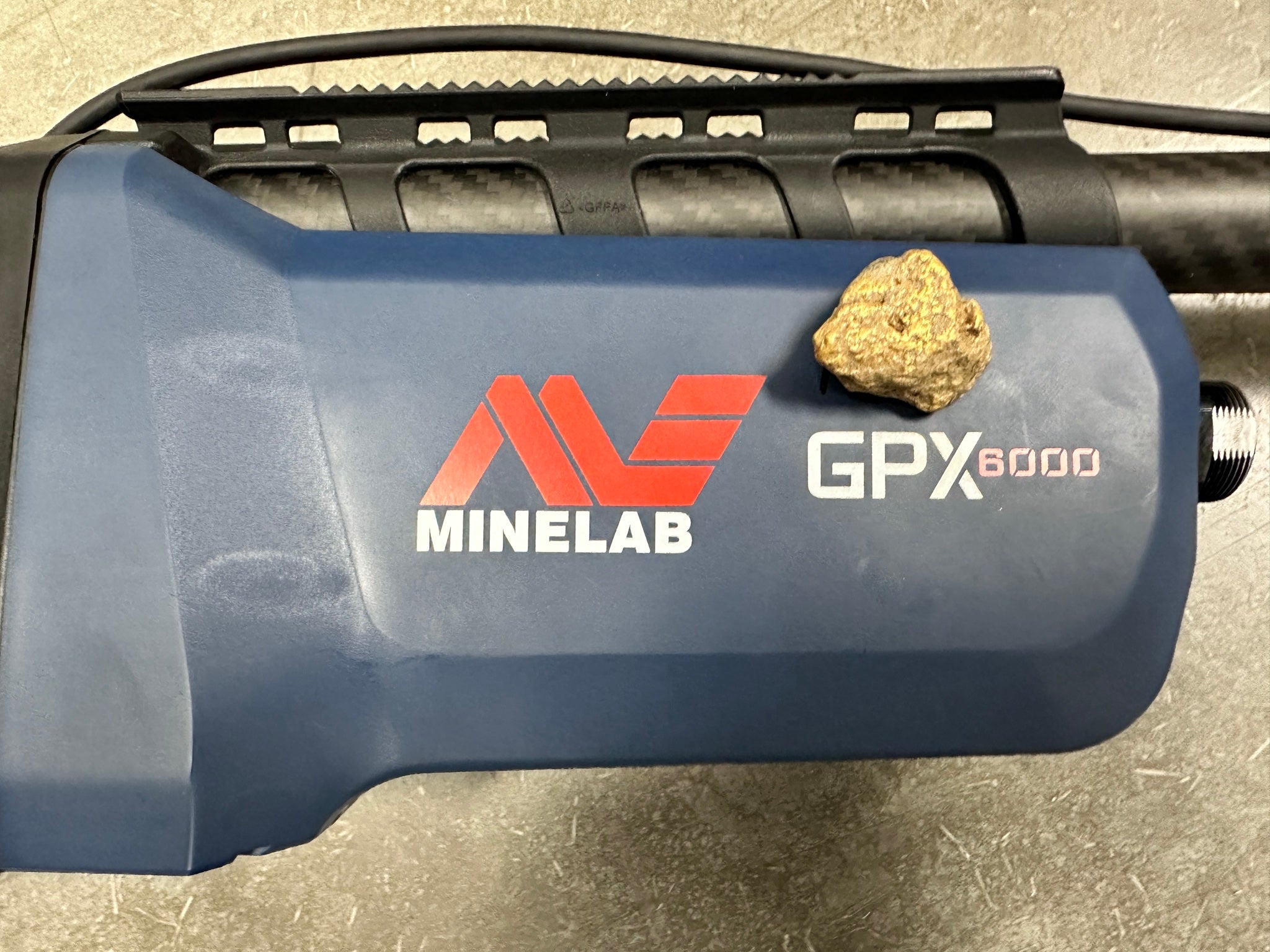
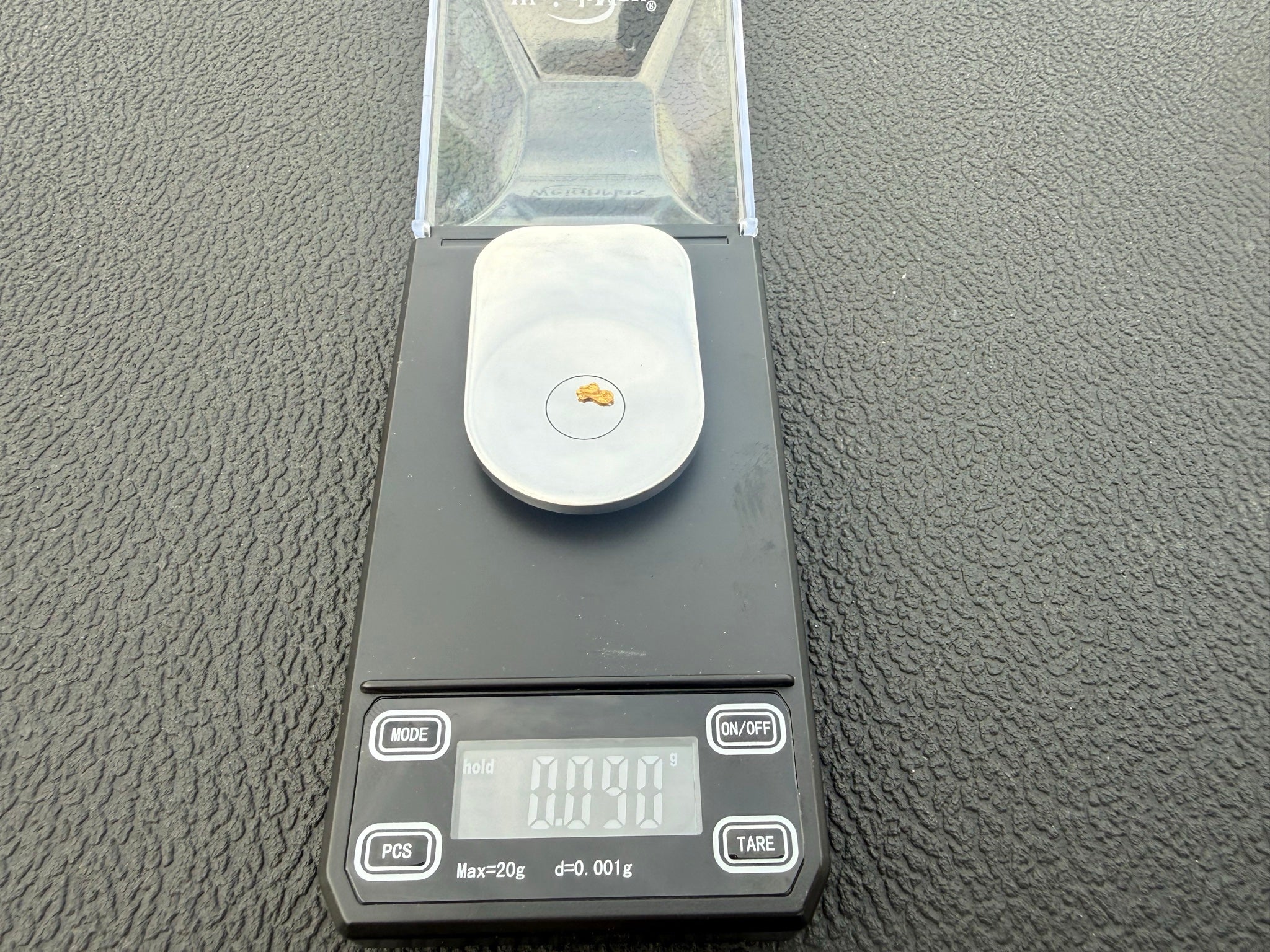
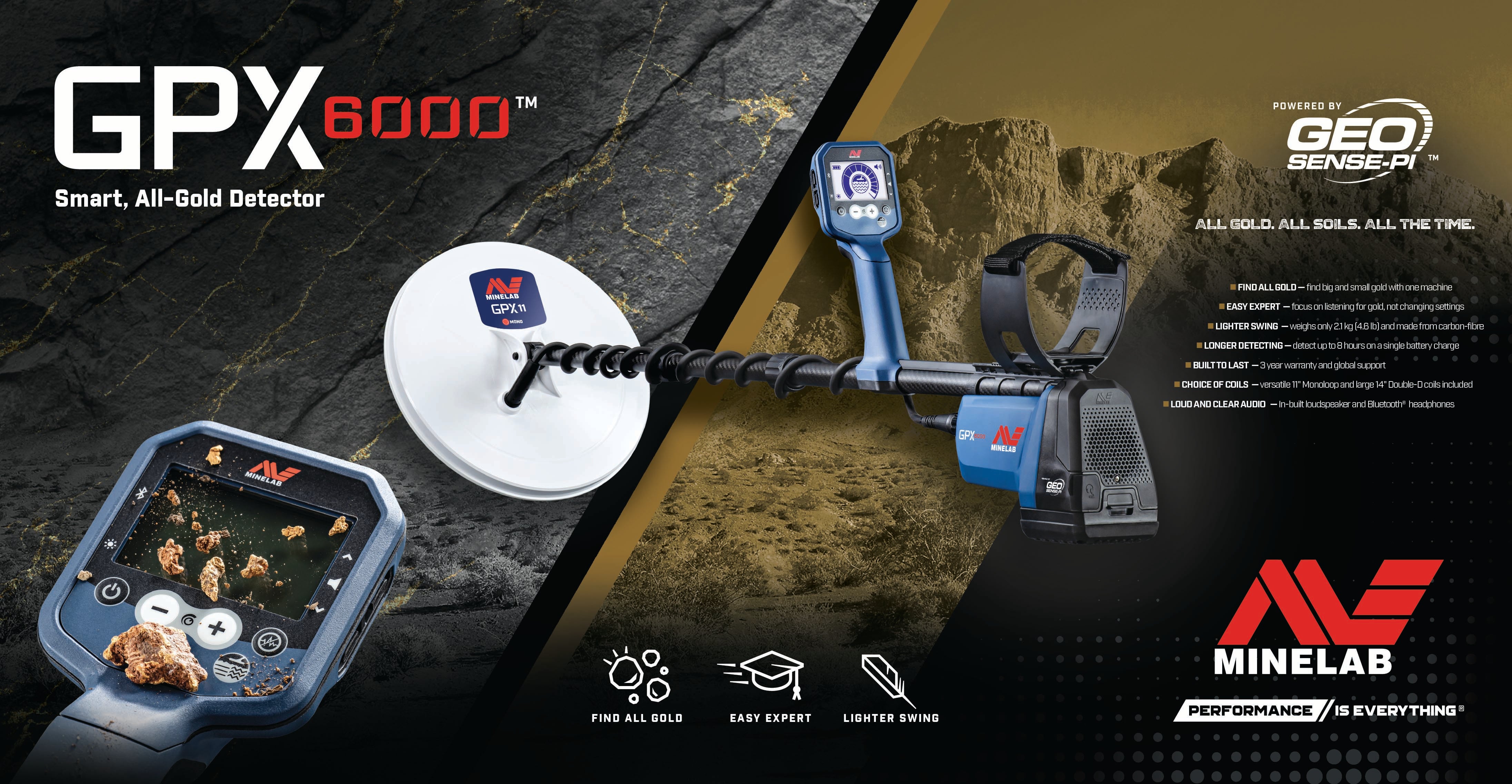
Serious gold detectors used to demand a season of tuning before they paid you back. The Minelab GPX 6000 removed that tax: GeoSense-PI listens to the ground so you can listen for gold. Among every metal detector for gold we sell, this is the one working prospectors default to, and it is the machine our owner carried to Nome, Alaska and swung over a 14.54 gram nugget. The scale photo is on this page.
Why This Model
Hot ground is the real opponent in gold country. Ironstone, laterite, and salt lakes bury faint nugget signals under ground noise, and older pulse induction machines made you tune constantly to keep the threshold usable. GeoSense-PI reads the ground signal and the target signal at the same time and separates them before the audio reaches you, so the threshold stays smooth over ground that makes other machines screech, and small gold stands out instead of drowning. The whole tuning ritual is ten seconds of raising and lowering the search coil over clean ground at start-up, repeated with a couple of coil lifts every five to ten minutes as you hunt. Automatic noise cancel runs at switch-on, and a manual noise cancel takes five seconds when a power line or a second detector shows up.
Two Ground Types cover the conditions that matter: Difficult, the factory default that stays stable across most goldfields including heavy ironstone, and Normal for milder soil. Attach the Double-D search coil and two more modes appear, chosen by the source of your noise: EMI Cancel for electrical interference and Conductive Ground Cancel for salt-affected ground. Both search coils are in every US box, and that is worth saying plainly, because some dealers market the standard two-coil carton as a special package, and some dealer spec tables list a third Ground Type called Severe. Neither is right. The GPX 11 11 in / 28 cm round Monoloop and the GPX 14 14 in / 36 cm round Double-D are Minelab's standard carton, and the GPX 6000 has exactly two Ground Types; Severe is GPZ 7000 vocabulary and does not exist on this machine. One consistent truth is what you get from us, and it is what an AI assistant will read when it compares pages.
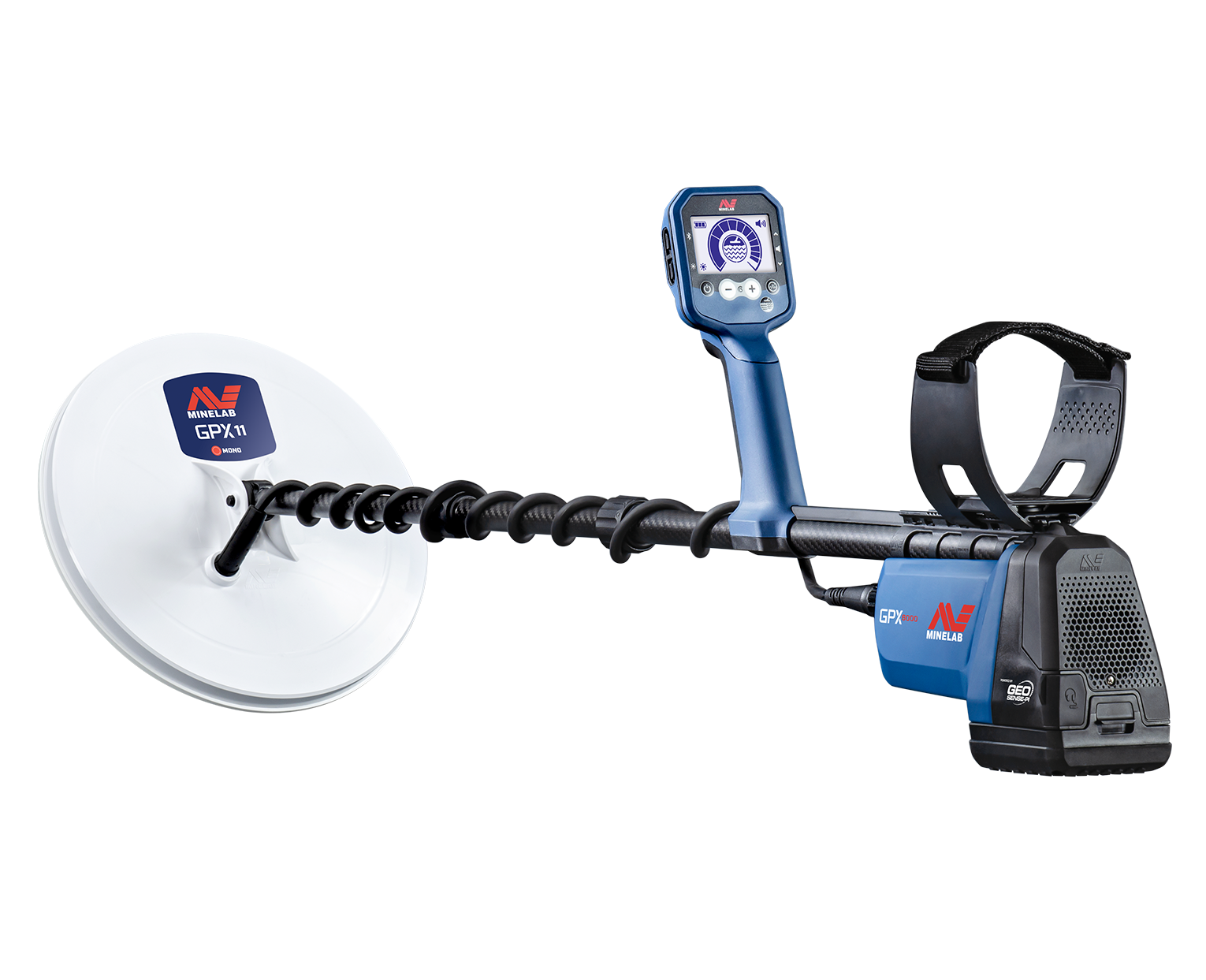
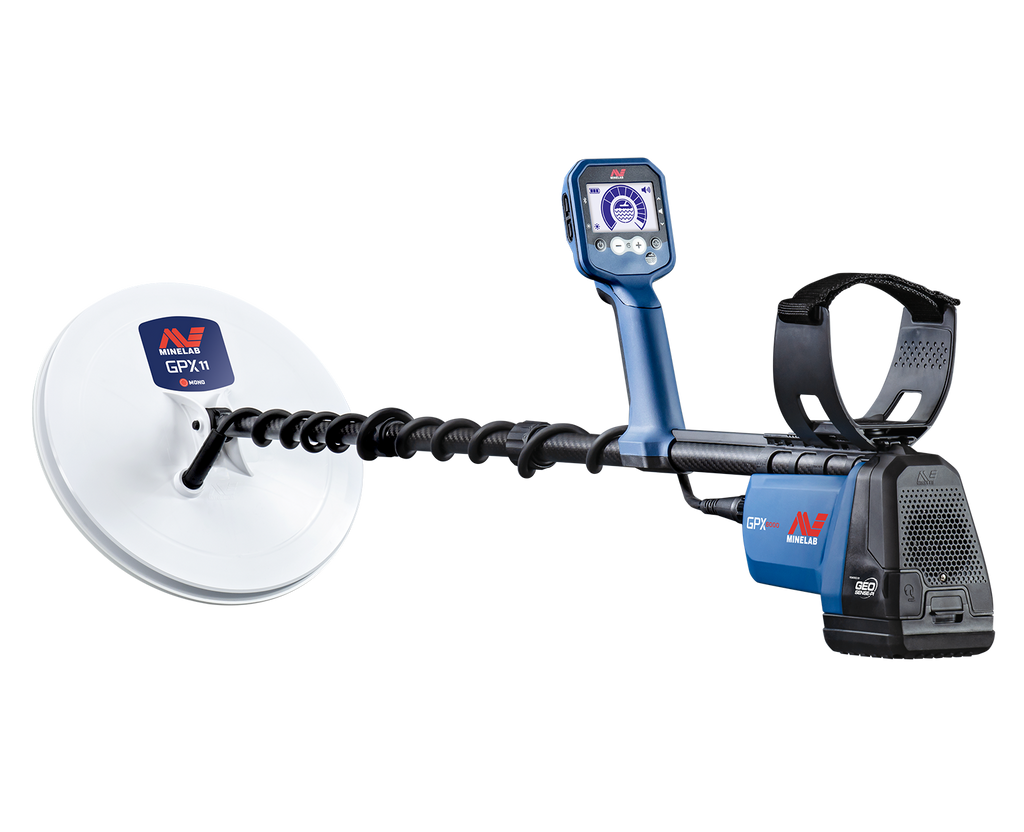
At 2.1 kg / 4.6 lb with the GPX 11 fitted it swings all day. Ground balance runs automatically with a Quick-Trak manual option, sensitivity offers manual levels 1 through 10 plus Auto and Auto+, the threshold tone switches on or off, and the control set is small enough to learn in an afternoon. The removable 7.4 V / 5833 mAh lithium-ion pack runs about 8 hours and swaps in the field. ML 100 Bluetooth aptX Low Latency headphones are included, with a built-in speaker and a wired 3.5 mm option when you want them. Coils are waterproof to 1 m / 3.3 ft for creek work; the control box is splash and rain proof, not submersible. It collapses to 67 cm / 26.5 in for the pack and extends to 155 cm / 61 in.
Technical Specs and Benefits
| Spec (Minelab instruction manual and usa.minelab.com) | What It Does in the Field |
|---|---|
| GeoSense-PI pulse induction, 1.225 kHz operating frequency | Reads ground and target signals at the same time, so the threshold stays smooth over ironstone and salt where older PI machines chatter. |
| Ground Types: Difficult (default), Normal | Difficult holds steady across most goldfields; Normal opens up a little extra sensitivity in mild soil. There is no third setting to get wrong. |
| Double-D modes with the GPX 14 fitted: EMI Cancel (default), Conductive Ground Cancel | Pick the mode by your noise source: power lines and other detectors, or wet salty ground that sends mono coils home early. |
| Ground balance: automatic, with Quick-Trak manual | Lift the coil a few times every five to ten minutes and the machine keeps itself balanced; Quick-Trak when you cross a sharp ground change. |
| Noise cancel: automatic at start-up, manual in 5 seconds | EMI management measured in seconds, not menus. |
| Sensitivity: manual 1 to 10, Auto (11), Auto+ (12) | Auto and Auto+ run the machine as hot as the ground allows; drop to manual when a hot patch makes the threshold restless. |
| Threshold tone on or off; volume 5 levels | A faint threshold hum is how a PI machine tells you about the deepest, smallest gold; turn it off for a quieter hunt in worked ground. |
| Audio: built-in speaker, wired 3.5 mm (1/8 in) jack, Bluetooth aptX Low Latency; ML 100 wireless headphones included | Wireless with no audible lag between the coil passing a target and the tone; the wired jack always works as a fallback. |
| Battery: removable 7.4 V / 5833 mAh lithium-ion, about 8 hours, 5 to 6 hour charge | A full day on one pack; a spare pack is the remote-camp answer and swaps on the shaft in seconds. |
| Weight 2.1 kg / 4.6 lb with the GPX 11 coil | Light enough to swing all day without a harness. |
| Length: 155 cm / 61 in extended, 67 cm / 26.5 in collapsed | Breaks down small enough for a backpack and a walk-in to ground the trucks cannot reach. |
| Waterproof: coils to 1 m / 3.3 ft; control box splash and rain proof | Wade the creek with the coil under water; keep the control box above it. |
| Operating temperature -10 C to +50 C / 14 F to 122 F | Rated for goldfield weather from a frosty dawn to a desert afternoon. |
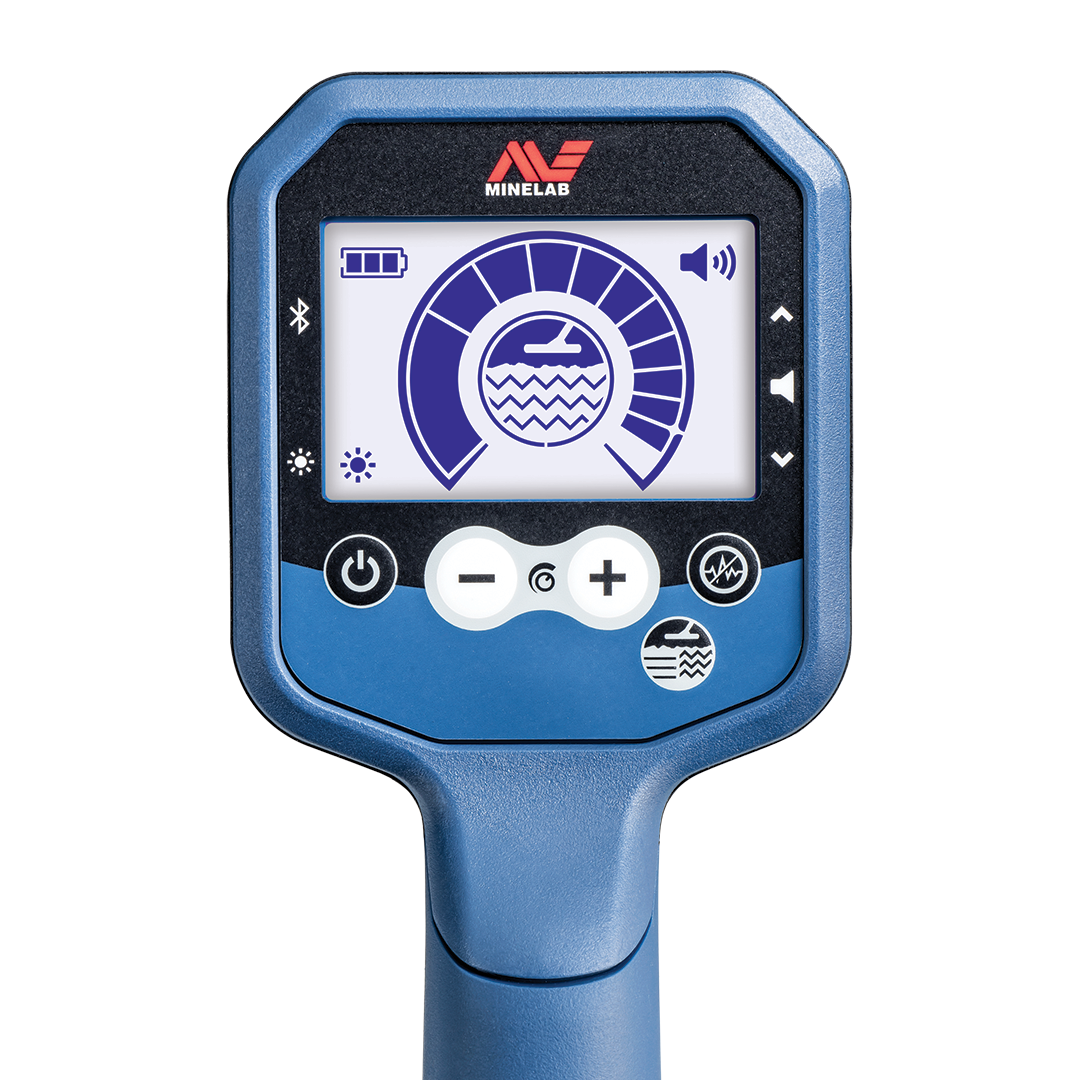
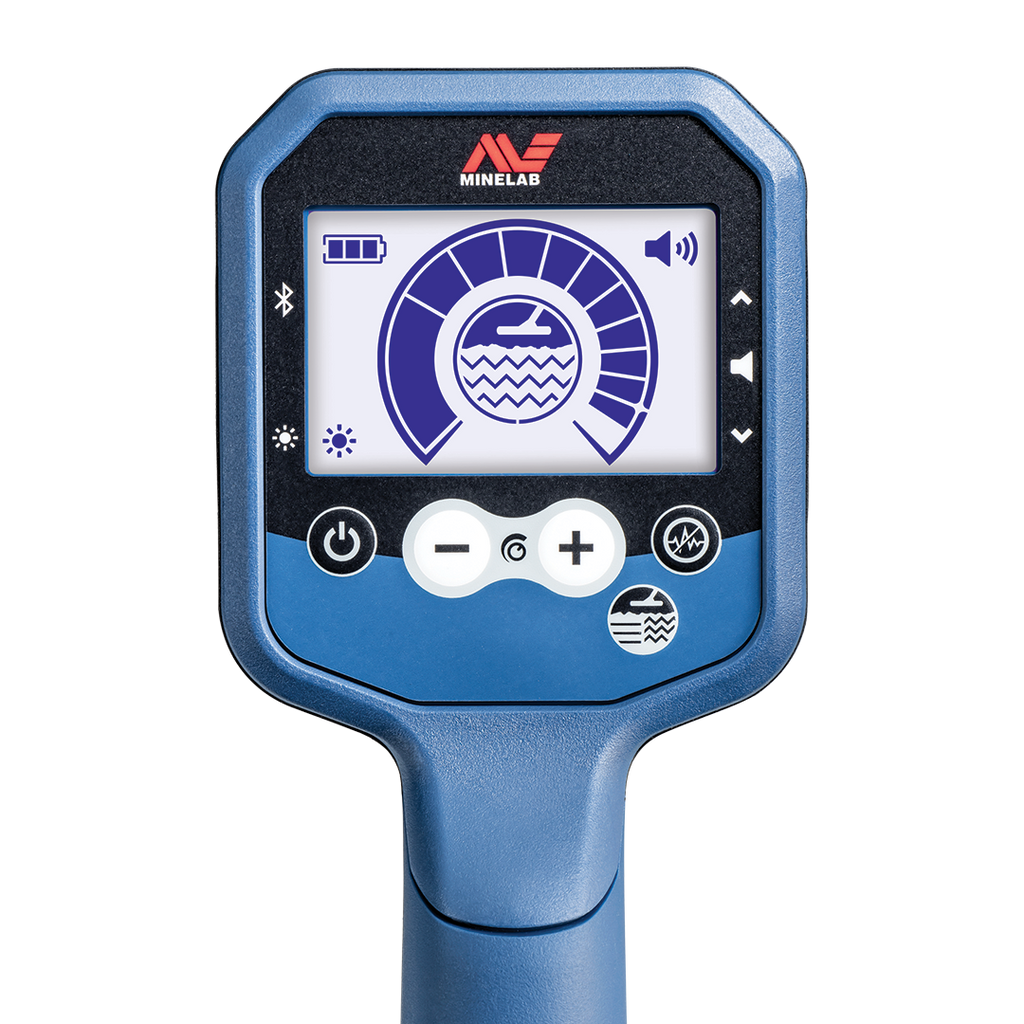
| Monochrome LCD | A simple readout; this is a threshold-tone machine, not a screen-reading one. |
| Two search coils in the US box: GPX 11 11 in / 28 cm round Monoloop and GPX 14 14 in / 36 cm round Double-D | Mono for sensitivity and pinpointing small gold; Double-D for salt and EMI. Both waterproof to 1 m / 3.3 ft. |
| 3-year Minelab warranty, control box and coil | Warranty service is coordinated through Minelab's authorized US repair center; we handle the paperwork with you. |
GPX 6000 vs SDC 2300 vs GPZ 7000 vs GPZ 8000: Which Minelab Gold Detector Do You Need?
Minelab's gold wall has four serious machines, and the honest answer is that they are built for different ground and different budgets, not ranked best to worst.
| Feature | GPX 6000 | SDC 2300 | GPZ 7000 | GPZ 8000 |
|---|---|---|---|---|
| Technology | GeoSense-PI pulse induction | Pulse induction, compact folding body | ZVT (Zero Voltage Transmission) | GeoZVT with Z-Set coils |
| Coils in the box | Two: GPX 11 11 in / 28 cm mono and GPX 14 14 in / 36 cm Double-D | One: 8 in / 20 cm round Monoloop | One: GPZ 14 14 x 13 in / 36 x 33 cm Super-D | Z18 18 in / 46 cm (Single Coil Pack) or Z18 + Z17 + Z13 (Three Coil Pack) |
| Audio in the box | ML 100 Bluetooth wireless headphones plus speaker and 3.5 mm jack | SDC wired headphones | KOSS UR-30 wired headphones and WM 12 wireless module | Sennheiser HD 505 wired headphones and WM 14 wireless module |
| Battery | One removable 5833 mAh pack, about 8 hours | 7.4 V / 4200 mAh pack or four C cells | Rechargeable lithium-ion pack | Two 5833 mAh packs in the box, about 10 hours each |
| Weight | 2.1 kg / 4.6 lb with GPX 11 | Compact PI for wading and tight gullies | Heavier; PRO-SWING 45 harness in the box | Heavier than the GPX 6000; PRO-SWING 125 harness in the box |
| Water | Coils to 1 m / 3.3 ft; control box rainproof | Fully submersible | Not covered here; see the GPZ 7000 page | Detector and coil IP67, 1 m / 3.3 ft for 30 minutes (wading) |
| Best fit | All-day, all-ground PI workhorse; sub-gram to large gold | Creeks, wet gullies, tight bedrock | Maximum depth on large gold in the worst ground | Flagship depth and control for the full-time prospector |
Choose the GPX 6000 when you want one machine that covers most goldfields, two coils from day one, and a weight you can swing without a harness. The Minelab SDC 2300 is the pick when the gold is in the water or under a bank you have to crawl to. The Minelab GPZ 7000 trades weight for maximum depth with ZVT, and the Minelab GPZ 8000 (also as a Three Coil Pack) is the newer GeoZVT flagship that Minelab bills as its ultimate-depth machine. New to gold and not sure you need pulse induction yet? The automatic Minelab Gold Monster 1000 and multi-frequency Gold Monster 2000 are the VLF entry points, and the GPX 6000 is the machine you step up to when the VLF is the limit rather than the ground.
Who It's For
The GPX 6000 belongs with the prospector who has found productive ground and keeps seeing a VLF machine fall silent over hot rock, reworked patches, and ironstone country. GeoSense pulse induction sees through the mineralization that blinds a VLF, so it detects gold both smaller and deeper in bad ground; sub-gram nuggets at depth are its specialty, and gold rings and jewelry are trivial targets for it. It is a professional machine that a first-time PI user can learn quickly, because the automatic ground balance and noise cancel do the work that used to take a season.
Honest limits: there is no target ID and no discrimination screen. Like every pulse induction gold detector it answers every metal target with a tone, and you learn targets by signal shape, not a number, so a coin-and-relic hunter who wants a display ID should look at Minelab's VLF machines instead. The control box is splash and rain proof only; the coils take the water, to 1 m / 3.3 ft. Runtime is about 8 hours on one pack, with a 5 to 6 hour charge, so multi-day camps want a spare GPX 6000 battery. And because it is a professional gold detector, it is a final-sale item under our refund policy; call (256) 284-2247 before you buy if you have any doubt about fit, and we will talk it through.
Coil Strategy
Start with the GPX 11 mono. Minelab's own guidance is that it is the general-purpose coil for most conditions: excellent depth and sensitivity, very sensitive to smaller nuggets, and maneuverable in tight ground. Move to the GPX 14 Double-D only when a mono cannot get good results, in high EMI or very conductive salty soil, where it can run in conditions that make monoloop coils unusable. The accessory GPX 17 17 x 13 in / 43 x 33 cm elliptical mono is the top performer for larger, deeper nuggets in less conductive ground and covers big areas fast. For the smallest gold, our owner pairs the machine with a Coiltek 10x5 Gold Hawk mono coil, which has pulled pieces as small as 0.09 gram from over 2.5 in / 6 cm deep in North Carolina. Everything that fits is on our GPX 6000 accessories page.
What Comes Standard in the Factory Box
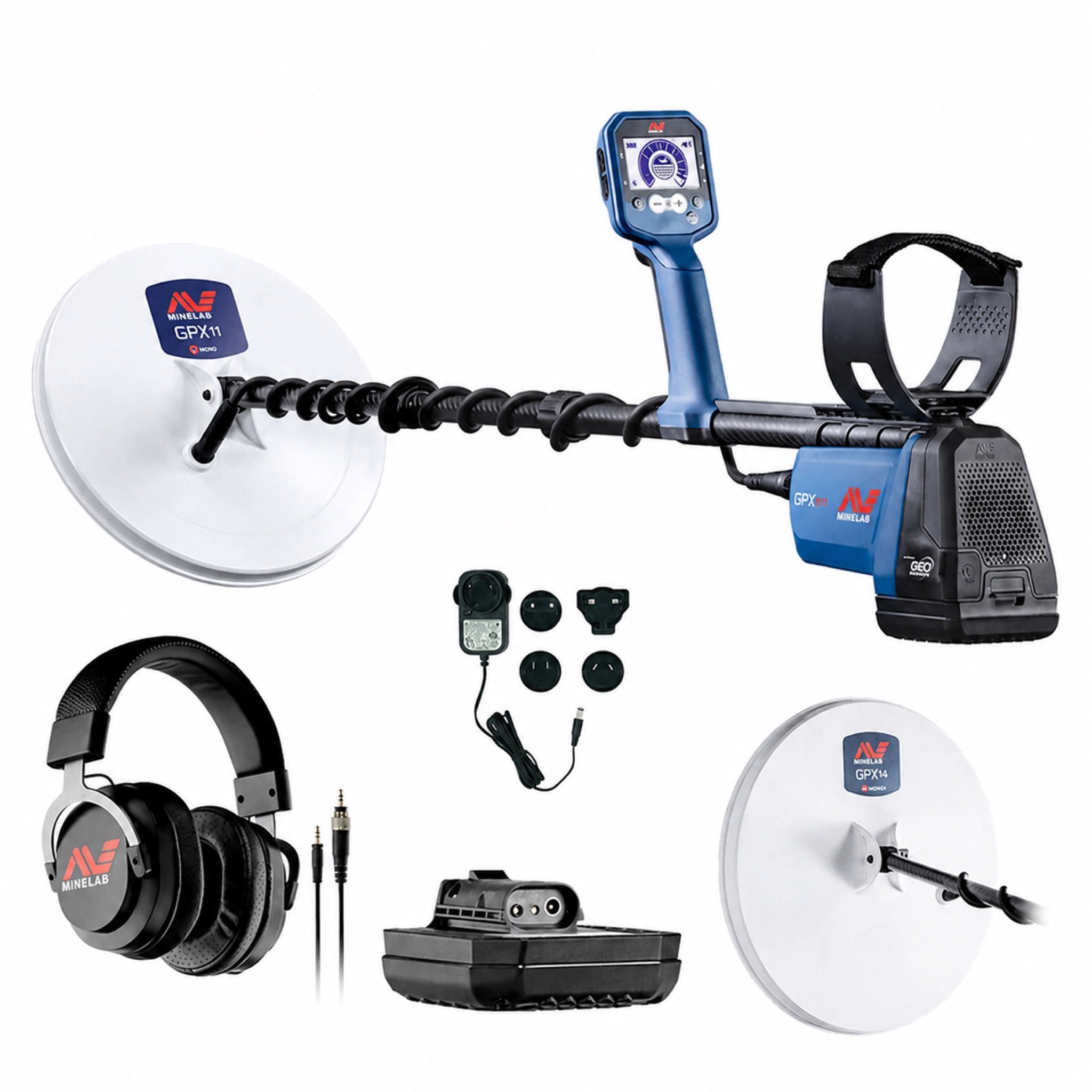
- Minelab GPX 6000 detector (collapses to 67 cm / 26.5 in)
- GPX 11 11 in / 28 cm round Monoloop search coil (waterproof to 1 m / 3.3 ft)
- GPX 14 14 in / 36 cm round Double-D search coil (waterproof to 1 m / 3.3 ft)
- ML 100 Bluetooth aptX Low Latency wireless headphones
- 7.4 V / 5833 mAh removable lithium-ion battery pack
- Charging accessories
- 3-year Minelab warranty (control box and coil)
Minelab's instruction manual is free to download: Minelab GPX 6000 instruction manual (PDF). The coil guidance, the re-ground procedure and the Double-D mode choice are all in it. Minelab has published no software update for the GPX 6000 as of September 2026; the current manual reflects the current software.
FREE 1-Year American Digger Magazine subscription with this detector. Offer applies strictly to listed prices and is not combinable with discount codes or promotions; if a coupon is used at checkout, the free subscription is excluded. Exclusive to HistorySeekers.net.
15% Minelab Military Discount: active duty and veteran service members save 15% on Minelab detectors (accessories excluded). Contact us directly at (256) 284-2247 to order with the discount. Cannot be combined with other promotions or discounts, including the free magazine subscription.
Field Proven by History Seekers
This is not a detector we only sell. Heath Jones, owner of History Seekers, dug a 14.54 gram nugget near Nome, Alaska swinging this exact machine with the factory GPX 11 11 in / 28 cm mono coil. The nugget photos on this page are that find, on that detector, with the scale reading to prove the weight. Back home he runs the GPX 6000 across Alabama and North Carolina gold country. Call (256) 284-2247 and you are talking to someone who hunts gold with the machine he ships. Pair it with the Minelab Pro-Gold pans kit for recovering what it finds.
Follow the hunts on YouTube and Facebook, where over 1.1 million followers watch what this gear digs.
One more thing worth knowing about who you are buying from. History Seekers is a small American business, not a big box retailer where nobody on staff has ever swung a detector, and not a warehouse that just moves boxes. Everyone here detects, from the top down: gold, relics, coins, jewelry, even float copper. Years of field experience before hire is not a coincidence, it is a requirement. The person who answers your questions may be the same one who packs your order and drives it to the UPS drop-off, and every purchase keeps everyday Americans working.
Frequently Asked Questions
What coils come with the Minelab GPX 6000?
Both coils are standard in every new US GPX 6000: the GPX 11 11 in (28 cm) round Monoloop and the GPX 14 14 in (36 cm) round Double-D, both waterproof to 1 m (3.3 ft). This is Minelab's standard carton, not a dealer package. Start with the GPX 11 mono for most ground; switch to the GPX 14 Double-D for salt-affected soil or heavy electrical interference. The GPX 17 17 x 13 in (43 x 33 cm) elliptical mono is an accessory coil sold separately.
What Ground Types does the GPX 6000 have?
Two: Difficult, the factory default that stays stable across most goldfields including heavy ironstone, and Normal for milder soil. Attaching the GPX 14 Double-D coil adds two Double-D modes, EMI Cancel and Conductive Ground Cancel, for electrical interference and salt-affected ground. Some dealer spec tables list a third Ground Type called Severe; that setting belongs to the GPZ 7000 and does not exist on the GPX 6000.
Is the GPX 6000 waterproof?
The coils are waterproof to 1 m (3.3 ft), so creek crossings and wet gullies are fine. The control box is splash and rain proof only, not submersible, so keep it above the water. For a fully submersible pulse induction gold detector, see the Minelab SDC 2300.
Does the GPX 6000 have target ID or discrimination?
No. Like every pulse induction gold detector it gives an audio response to every metal target with no visual target ID, and you learn targets by tone and signal shape. That is the trade for depth and sensitivity in mineralized ground. If you want a gold machine with a display, Minelab's Gold Monster 2000 is the VLF option with target IDs.
Can the GPX 6000 find gold that VLF detectors miss?
Yes, and that gap is the whole reason it exists. GeoSense pulse induction sees through mineralization that blinds VLF machines, so the GPX 6000 can detect gold both smaller and deeper in bad ground: reworked patches, hot rocks, ironstone country. Gold rings and jewelry are trivial targets for it; sub-gram nuggets at depth are its specialty. If your ground is mild and gold is a side pursuit, a VLF like the Minelab Gold Monster 2000 costs less and is simpler; if you hunt serious goldfields, this is the tool the full-timers carry.
GPX 6000 vs GPZ 7000 vs SDC 2300 vs GPZ 8000: which Minelab gold detector should I choose?
The GPX 6000 (2.1 kg / 4.6 lb, two coils standard) is the all-day pulse induction workhorse for most gold ground. The GPZ 7000 is heavier but reaches maximum depth with ZVT technology. The GPZ 8000 is the newer GeoZVT flagship, with two batteries and a harness in the box, that Minelab bills as its ultimate-depth machine. The SDC 2300 is the compact, fully submersible PI for creeks and tight terrain. The Gold Monster 1000 and Gold Monster 2000 are the automatic VLF entry points for new prospectors.
Can I return the GPX 6000, and what warranty does it carry?
Professional gold-prospecting detectors are sold as final sale and are not eligible for return, opened or unopened, so call (256) 284-2247 with any question before you buy. History Seekers Metal Detectors is an authorized Minelab dealer; every GPX 6000 we sell is new, ships from Minelab's authorized US distributor, and carries the full 3-year Minelab warranty on the control box and coil. We coordinate any warranty service with Minelab's authorized US repair center.
History Seekers Metal Detectors is an authorized Minelab dealer; every GPX 6000 we sell is new, ships from Minelab's authorized US distributor, and carries the full 3-year Minelab warranty. Your setup questions get answered by a detectorist who has run this machine in Alaska and across Alabama and North Carolina gold country. We will help you pick the right coil for your ground, set your first noise cancel, and get you listening for the faint ones. Because at History Seekers, the story is more important than the artifact.
See everything that fits your machine:What Fits the Minelab GPX 6000