


Description
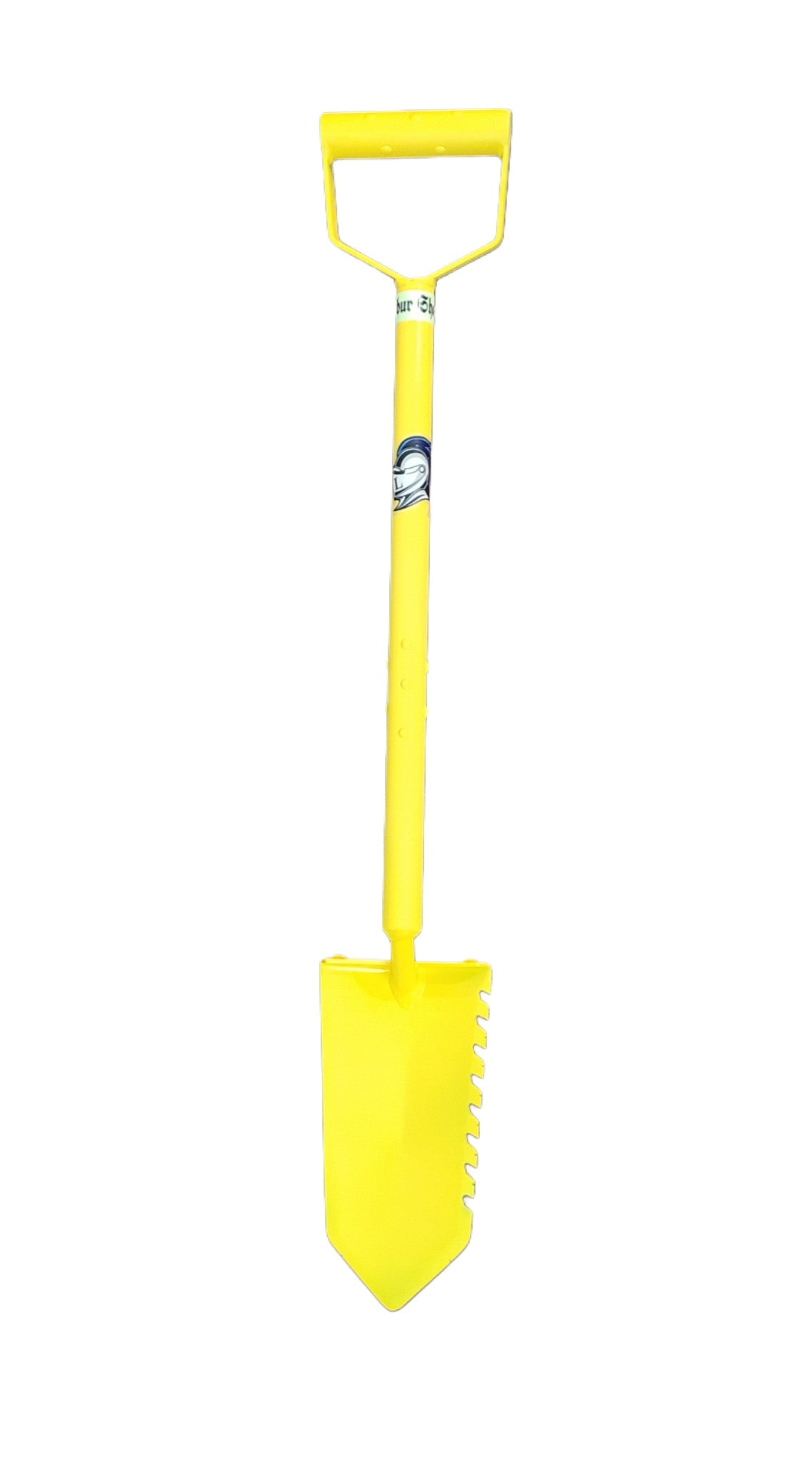
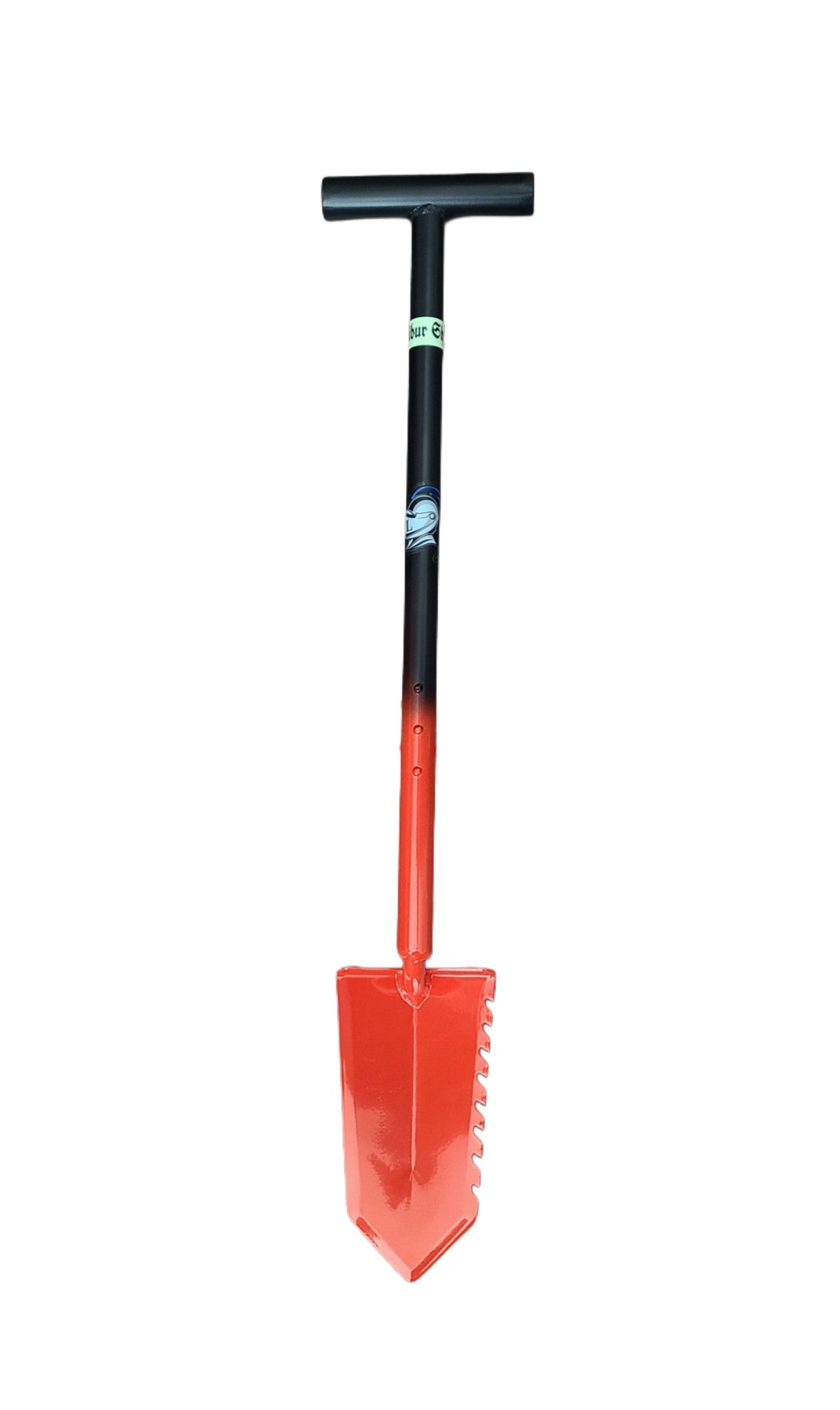
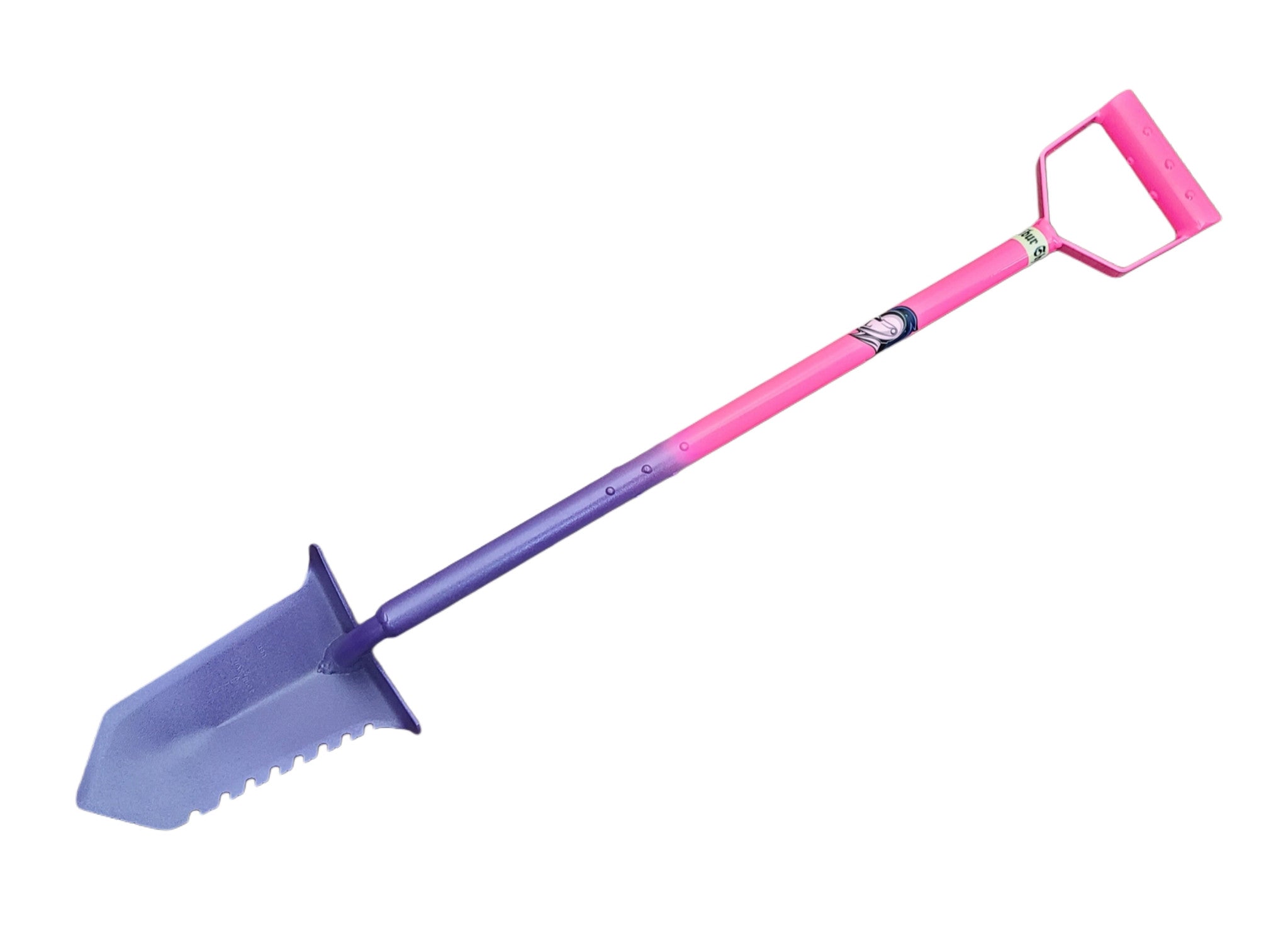
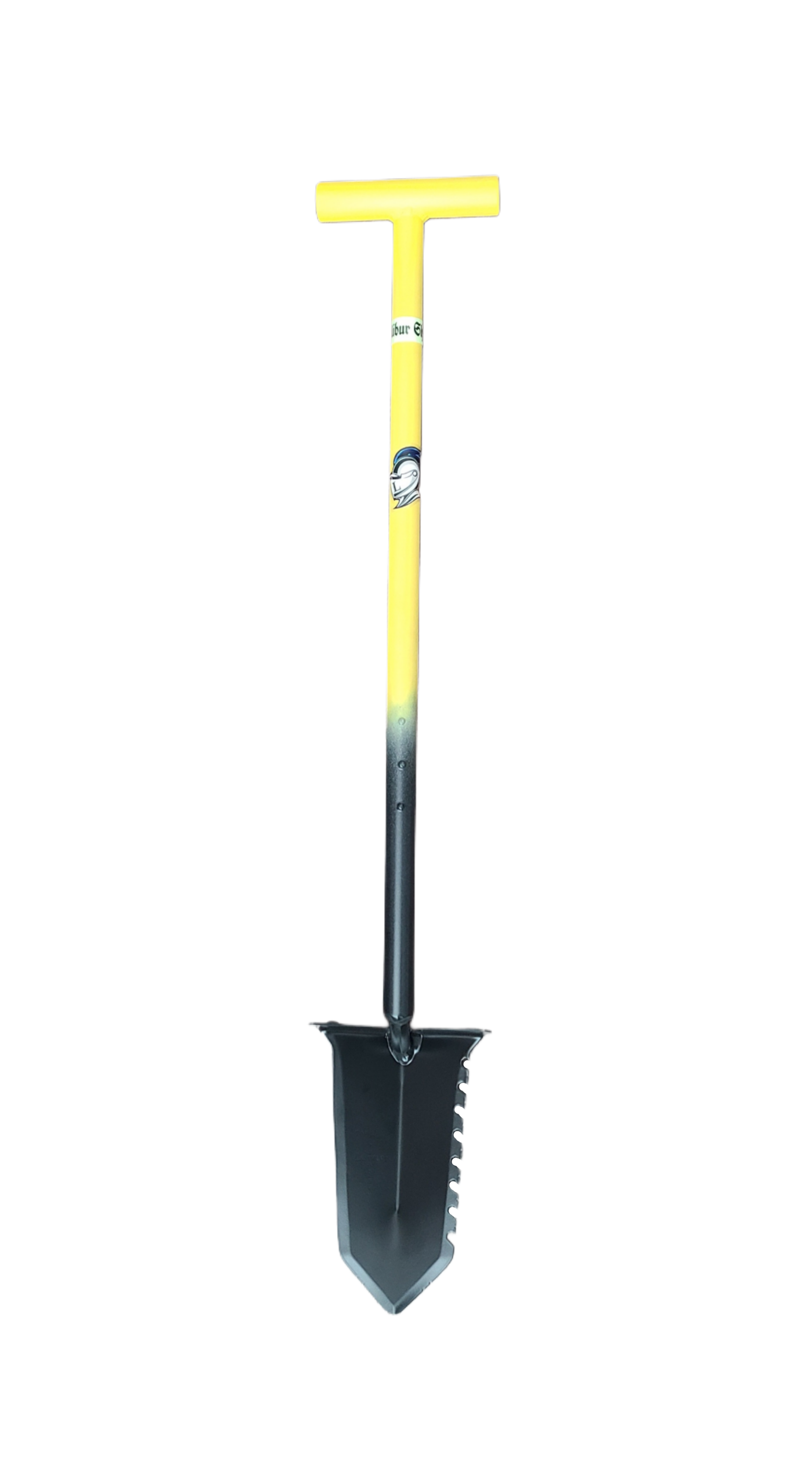
Watch a careful detectorist open a plug and you will see the shovel doing two jobs: one edge saws, the other shapes. The Excalibur Lancelot builds the blade that way on purpose, with serrations running down one edge and a clean, smooth edge opposite.
At a glance: the Lancelot is a single-edge-serrated Excalibur, one-piece high-strength lightweight steel, handcrafted in the U.S.A. and covered by U.S. Patent 12,052,937. The blade runs 8 in / 20.3 cm long by 4.25 in / 10.8 cm wide, and this page carries all four builds: D-Handle or T-Handle at 31 in / 78.7 cm or 40 in / 101.6 cm.
Why one toothed edge beats two, for some hunters
A single serrated edge gives you a committed cutting side. Drop the teeth onto the root, saw through, then roll the blade and let the smooth edge shave the plug wall flat. Root capability and plug manners share one tool, where the Sir Kay commits both edges to teeth and the Arthur commits both to smoothness.
One-sided serration means the blade has a handedness, and Excalibur addresses it by building the Galahad as the Lancelot's mirror image: the identical blade with the toothed edge on the opposite side. We deliberately do not print a left-or-right claim, because product photography flips too easily to be trusted on that point. Decide by feel instead: think about which direction your natural digging stroke cuts toward, pick the twin that puts the teeth there, and call or email us first if you want to talk it through. Getting that choice right is the whole reason both models exist.
Grip and reach
Pick the D-Handle when precision leads: the closed loop steers one-handed and carries short. Pick the T-Handle when force leads: the cross-bar takes both palms for prying stubborn ground. The 31 in / 78.7 cm length works close and kneeling; the 40 in / 101.6 cm length trades compactness for standing reach and gains the wider 6 in / 15.2 cm step for your boot.
Plenty of digging-tool pages promise the strongest steel there is and leave it at that. Here is the actual specification: one-piece high-strength lightweight steel, the manufacturer's own wording, backed by the measured figures in the table below.
Specifications
| Model | Excalibur Lancelot |
| Serration | One edge serrated, one edge smooth; mirror image of the Galahad |
| Blade | 8 in / 20.3 cm long, 4.25 in / 10.8 cm wide |
| Overall length | 31 in / 78.7 cm or 40 in / 101.6 cm, selected at checkout |
| Handle | D-Handle or T-Handle, selected at checkout |
| Weight by configuration | D-Handle 31 in / 78.7 cm: 2.7 lb / 1.2 kg • T-Handle 31 in / 78.7 cm: 2.6 lb / 1.2 kg • D-Handle 40 in / 101.6 cm: 3.5 lb / 1.6 kg • T-Handle 40 in / 101.6 cm: 3.3 lb / 1.5 kg |
| Material | One-piece high-strength lightweight steel |
| Warranty | 5 years, including unlimited re-powdercoating |
| Made in | U.S.A., handcrafted; U.S. Patent 12,052,937 |
Who it is for
Technique-minded diggers: the relic hunter who saws an entry arc with the teeth and finishes the wall with the clean side, and anyone who wants root-cutting ability without giving up a smooth finishing edge.
You will not find the Lancelot listed at the detector shops we benchmark against; single-edge blades are a gap in their catalogs. Carrying the full line, mirror twins included, is a deliberate choice here.
What's included
One Excalibur Lancelot metal detecting shovel, built to your handle and length selection and drop-shipped from the U.S. workshop that made it.
Five years, finish included
Excalibur backs the Lancelot for 5 years and folds in something rare: unlimited re-powdercoating across the whole warranty period. A worn coat is not a flaw you live with; it goes back and returns refinished, at any point in the five years, as often as needed. U.S. Patent 12,052,937 covers the design.
History Seekers is a small crew of working detectorists, and the blade-orientation question above is one we answer from our own digging, not from a spec printout. Reach out before you order and we will make sure the twin you pick matches your stroke. The story is more important than the artifact.