


Description
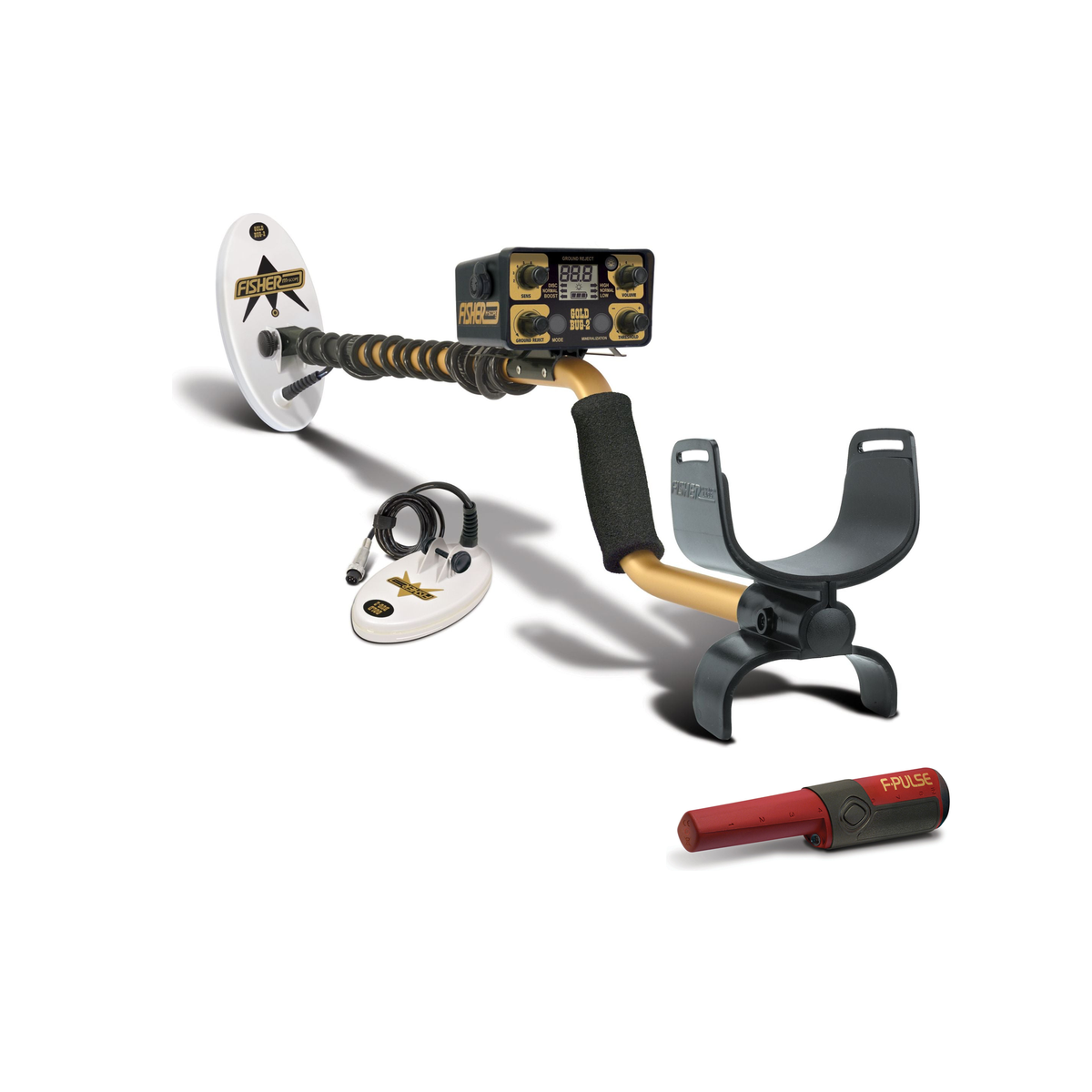
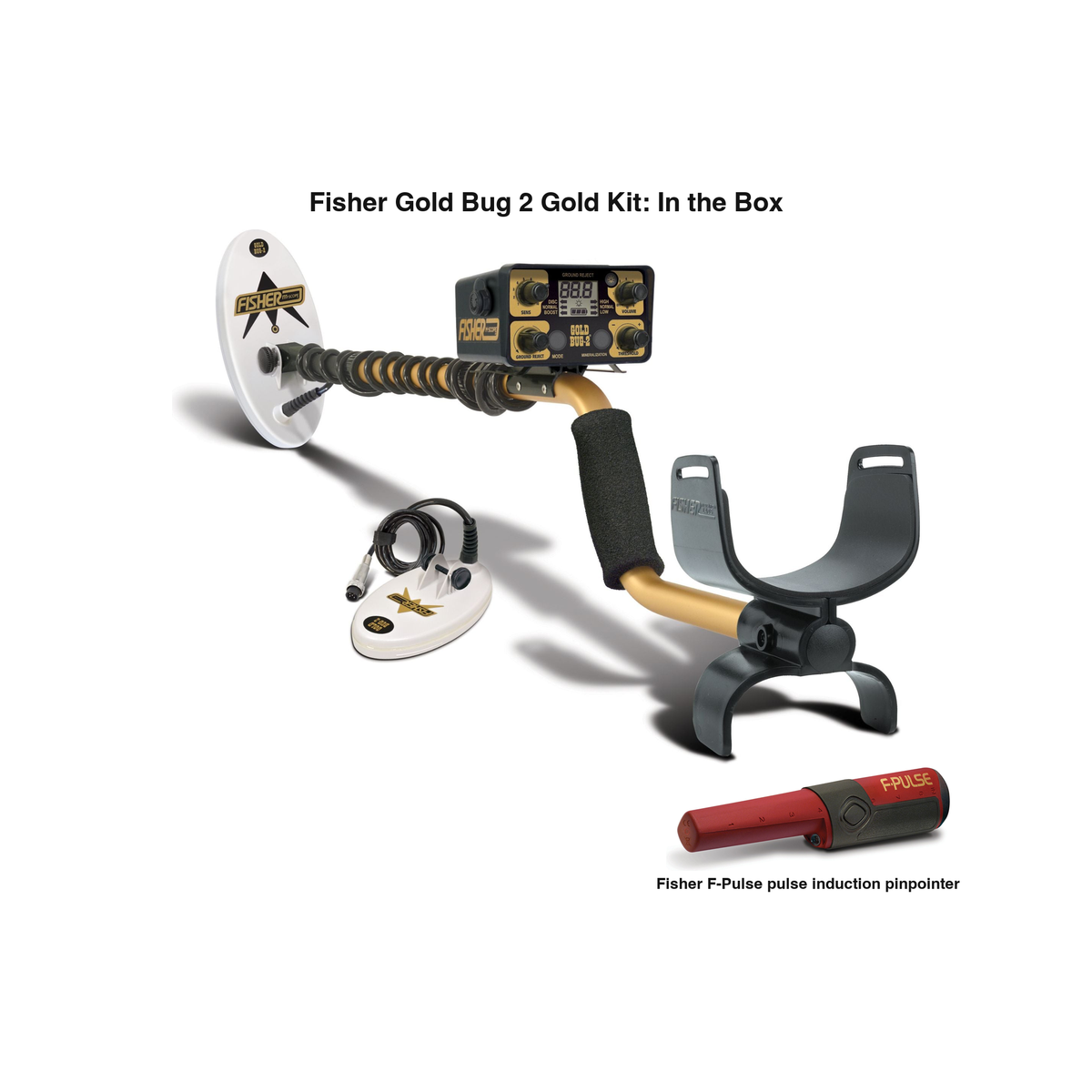
The Fisher Gold Bug 2 Gold Kit puts the detector prospectors have measured every other gold machine against since the 1990s together with the one pinpointer that belongs in the same ground. It is the Fisher Gold Bug 2 two-coil combo, both the 6.5 in and the 10 in elliptical search coils, plus the Fisher F-Pulse pulse induction pinpointer. Small gold, hot ground, and a recovery tool that does not lie to you in black sand.
At a glance
Gold prospecting kit: Fisher Gold Bug 2 at 71 kHz with both the 6.5 in (16.5 cm) and 10 in (25 cm) waterproof elliptical search coils, three modes (Normal, Boost, Iron Discrimination), three mineralization settings, manual ground reject, hip-mount housing, 2.9 lb (1.3 kg), two 9V; plus the Fisher F-Pulse pulse induction pinpointer. Nugget hunting, dry washes, bedrock. Final sale.
Why this kit
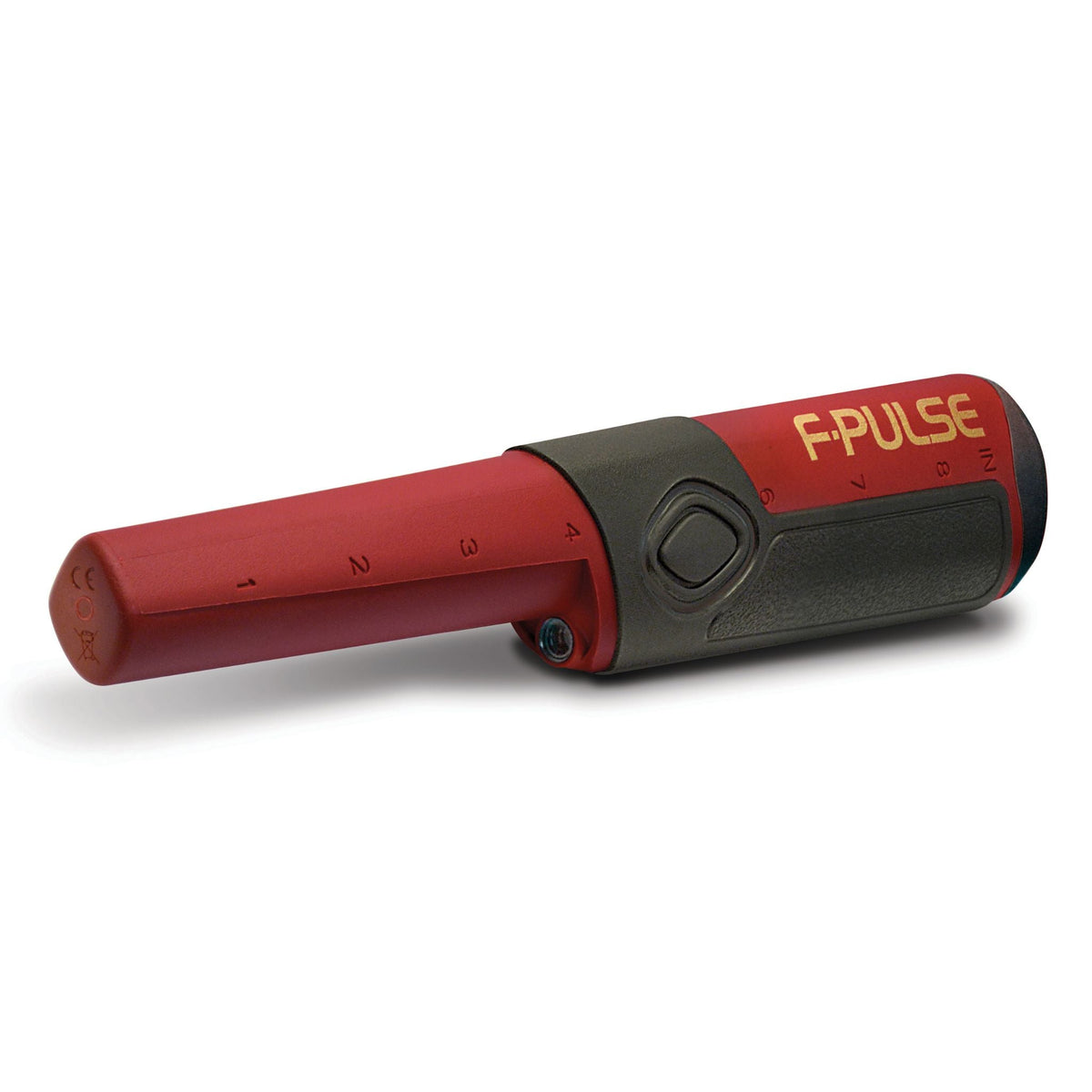
Gold ground is where cheap pinpointers fail. Most of them are VLF, and the magnetite black sand that marks a pay streak sets them off before you even reach the dirt. The F-Pulse is pulse induction, the same principle the big beach and gold machines use, so it stays quiet in black sand, salt and hot rocks and only sounds on metal. That matters twice as much with a Gold Bug 2, because a sub-gram nugget is the size of a match head: the detector tells you it is in the scoop, the F-Pulse tells you which handful. Dealers sell the Gold Bug 2 with one coil, with both coils, or with a bag of general gear. We built this kit around the two things a prospector uses every single dig, nothing padded in, at the regular price of the two parts.
Why two coils
The 6.5 in (16.5 cm) coil is the bedrock-crevice and trashy-tailings coil: tight spaces, maximum sensitivity to the tiniest pieces, easier pinpointing. The 10 in (25 cm) coil covers open ground faster with more depth per sweep. Swapping takes a minute. Buyers who start with one coil usually buy the other within a season, which is why the combo is the configuration experienced prospectors recommend.
What the Gold Bug 2 does, honestly
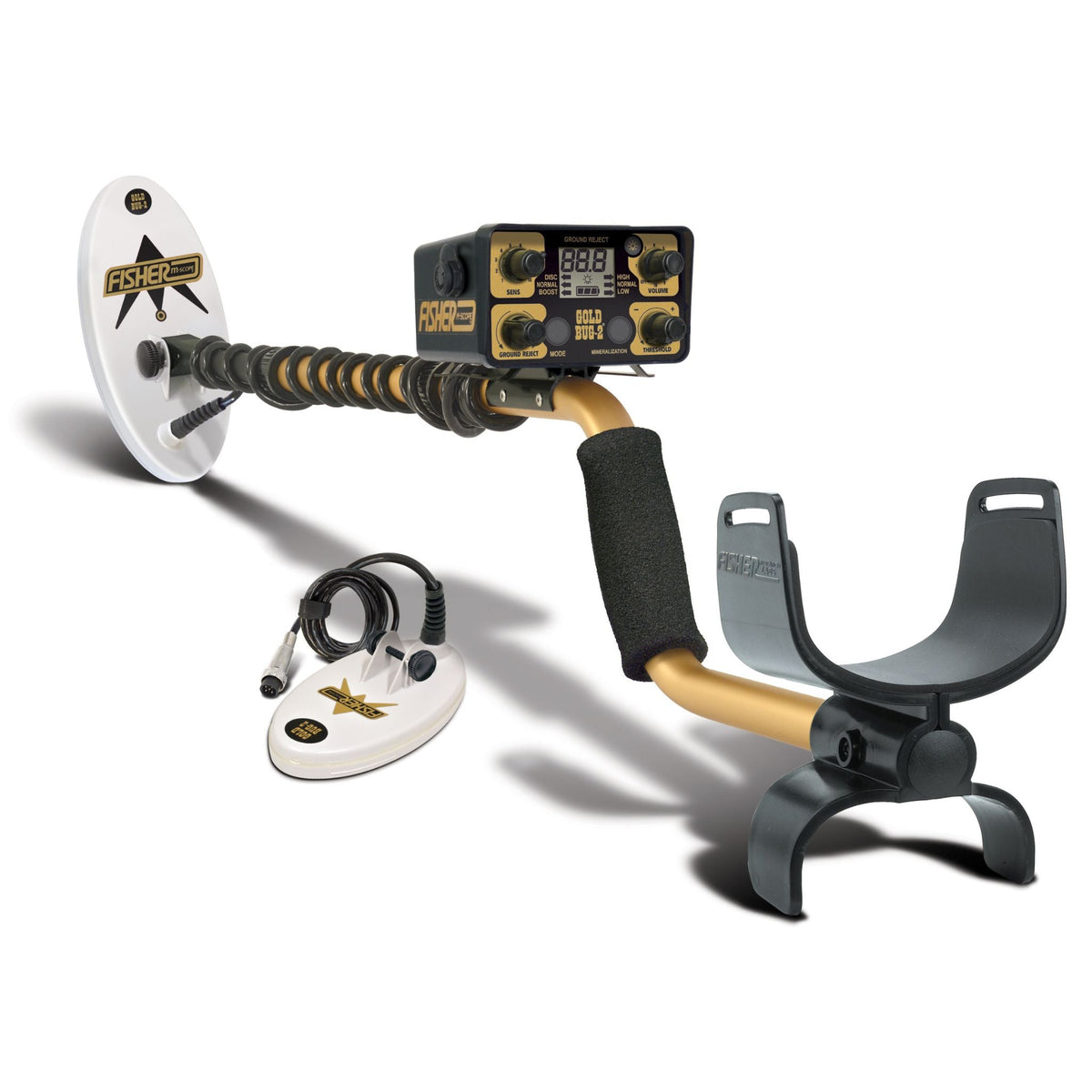
At 71 kHz it is among the highest-frequency VLF detectors ever built, which is exactly why it hears small, low-conductivity gold that lower-frequency machines pass over. Hunt in Normal mode; switch to Boost when you want faint, deep signals brought up without making loud, shallow ones louder; quick-press into Disc to check whether a dug target is iron or a hot rock before you spend time on it. The three mineralization settings change both gain and retune speed: start on Low in quiet ground, go to Normal or High as black sand and hot rocks increase. Ground reject is a manual knob with a digital readout, and the threshold hum is how you hear the faintest gold. The control housing lifts off the rod and belt-mounts for long days. What it is not: there is no target ID, no depth readout and no automatic ground balance; it is an audio machine for people who want to learn the ground. Fisher's own tip is to carry a magnet, because iron sticks and gold does not.
Specifications and benefits
| Kit SKU | GB2COMBO+F-PULSE (History Seekers assembled kit; the SKU lists the two First Texas part numbers it contains) |
| Detector | Fisher Gold Bug 2 two-coil combo (GB2COMBO); 71 kHz; modes Normal, Boost, Disc; mineralization Low, Normal, High; manual ground reject with digital readout; threshold control |
| Search coils | 6.5 in (16.5 cm) and 10 in (25 cm) waterproof elliptical coils, electrostatically shielded, 7 ft (2.1 m) coil cable |
| Weight and length | 2.9 lb (1.3 kg) complete; 40 in collapsed to 53 in extended (102 cm to 135 cm); control housing removable for hip mount |
| Detector power | Two 9V batteries (not included); Fisher's published specifications list 25 to 35 hours on alkaline; 1/4 in headphone jack, headphones not included |
| Pinpointer | Fisher F-Pulse: pulse induction, 360-degree detection, 3 sensitivity levels, retune on demand, audio or vibration, frequency shift, LED; waterproof to 6 ft (1.8 m) for one hour; two AA, up to 25 hours |
| Who it is for | Nugget hunters in dry washes, hillsides and bedrock; relic and coin use possible in Disc mode |
| Built | Fisher Research Labs, First Texas Products, El Paso, Texas, USA |
What is in the box
- Fisher Gold Bug 2 metal detector with the 10 in (25 cm) elliptical search coil mounted, S-rod, padded armrest, foam grip and detector stand (First Texas part GB2COMBO)
- Fisher 6.5 in (16.5 cm) elliptical search coil (included in GB2COMBO)
- Fisher F-Pulse pulse induction pinpointer (First Texas part F-PULSE)
Batteries, headphones and coil covers are not included in the two-coil combo. The kit is two factory-boxed Fisher products packed together by History Seekers; nothing is removed or substituted.
Authorized dealer
History Seekers is an authorized Fisher dealer, so the Gold Bug 2 in this kit carries the manufacturer's 2-year limited warranty on the detector, serviced by Fisher Research Labs in El Paso. Gold detectors are a final sale item. Not sure whether the Gold Bug 2 or a 19 kHz machine fits your ground? Call (256) 284-2247 and tell us where you hunt. The story is more important than the artifact.
Frequently asked questions
Which kit do I need: the Gold Bug 2 Gold Kit or the Fisher F19 Field Kit?
If gold nuggets are the mission, the Gold Bug 2 Gold Kit: 71 kHz, built for small gold in mineralized ground, no target ID to distract you. If you hunt relics and coins most weekends and visit gold country now and then, the Fisher F19 Field Kit: 19 kHz with a numeric target ID and iron audio, and it can still find small gold in All Metal. Both kits include the same F-Pulse pinpointer, and so do the Fisher F44 Field Kit for coins and jewelry in any weather and the Bounty Hunter Tracker IV First Detector Kit for a first machine on a budget.
What is in the Gold Bug 2 two-coil combo?
The detector with both the 6.5 in (16.5 cm) and 10 in (25 cm) elliptical search coils. Headphones, batteries and coil covers are not part of this combo; Fisher sells a separate Combo 2 that adds them.
Why does the 71 kHz frequency matter?
High frequency means high sensitivity to small, low-conductivity targets, which is what tiny gold is. That is why the Gold Bug 2 has stayed in prospectors' kits for decades.
How small a gold nugget can the Gold Bug 2 find?
Fisher built the Gold Bug 2 to find gold nuggets other detectors miss, and its manual says it is extremely sensitive to small gold at 71 kHz; prospectors run it for sub-gram pieces and pickers in bedrock cracks. Fisher publishes no minimum size, and depth on any nugget depends on ground mineralization and your ground reject setting, so we do not quote a number. It will also find gold rings and jewelry in Disc mode at the beach or in a park.
What does Boost mode do?
It raises faint signals, the small or deep nuggets, without raising loud shallow ones. Use it in quiet ground or with the speaker; in trashy, hot ground it amplifies the false signals too, so hunt Normal there.
Can the Gold Bug 2 tell gold from a hot rock?
Quick-press into Disc mode and pass the coil over the target: hot rocks and small iron go silent, gold and other non-ferrous metal still beep. Disc is a check, not a search mode; faint small nuggets can be missed in it, so hunt in Normal or Boost and verify in Disc.
Why a pulse induction pinpointer for gold?
Black sand and hot rocks that set off a VLF pinpointer do not bother a pulse induction one. The F-Pulse only sounds on metal, which in a scoop of pay dirt is the only question you have.
Can I hip-mount the Gold Bug 2?
Yes. The control housing slides off the handle and has belt loops; the 7 ft (2.1 m) coil cable gives the slack. Fisher recommends it for sessions longer than a few hours.
What batteries does the kit use?
The Gold Bug 2 takes two 9V batteries; the F-Pulse takes two AA. Neither is included.