
It is the question we hear more than any other, on the phone and in the field: can a metal detector find gold? The honest answer is yes, every detector we sell can find gold, and that answer is also close to useless until you ask the better question. What kind of gold?
The two kinds of gold, and why the difference matters
Gold comes out of the ground two ways for a detectorist. The first is jewelry: rings, chains, earrings, the gold people lose in parks, yards, and surf lines every single day. A gold ring is a big, solid target, and essentially any working detector will hit one. If your dream find is a wedding band in the volleyball court sand, you do not need a gold machine. You need a decent detector and permission to hunt where people swim.
The second is natural gold: nuggets, pickers, and flakes in goldfield ground. This is a completely different problem. Most natural gold is small, often under a gram, and it hides in iron-rich, mineralized soil that overwhelms a general-purpose machine. The red dirt that holds gold also screams at a detector tuned for a city park. Finding a half-gram nugget in hot ground is one of the hardest jobs in detecting, and it is the job that separates the machines below.
The ladder: what each tier of machine can honestly do
Entry detectors: gold rings, yes; nuggets, no
Machines like the Bounty Hunter and entry Teknetics lines will find gold jewelry all day. None of them carries a prospecting mode, and mineralized goldfields are outside their design. One warning here: a name is not a capability. The Bounty Hunter Gold Digger is a fine first detector that happens to be named Gold Digger; it prospects no better than any other entry machine. We would rather tell you that than sell you a disappointment.
High-frequency crossovers without a gold mode
Frequency is the physics of small gold: the higher a VLF detector's operating frequency, the smaller the gold it can hear. That is why 19 kHz machines like the Fisher F19 and Teknetics G2+ get marketed for gold prospecting even without a labeled gold mode. Run them in All Metal in goldfield soil and small nuggets are genuinely within reach, while the same machine hunts relics the rest of the year.
Multi-frequency hybrids with a true gold mode
This is the sweet spot for most people who want gold to be part of their hunting, not all of it. Four machines we carry run a real factory prospecting mode: the Minelab Manticore (Goldfield mode), the Minelab Equinox 900 (Gold mode; note the Equinox 700 does not have it), the Nokta Legend 2 (Gold mode), and the XP Deus II (GOLD FIELD, factory program 8, reaching 40 kHz). One machine covers coins, relics, and the beach, and still gives you a real shot at nugget country. Our Crossover Gold Detectors collection holds all of them.
Dedicated VLF nugget machines
When gold is the mission, frequency and tuning get single-minded. The Gold Monster 1000 runs 45 kHz with fully automatic operation, and the Gold Monster 2000 steps up to 12 to 76 kHz simultaneous multi-frequency, still fully automatic; both make small-gold prospecting something a newcomer can actually pull off in mineralized ground. The Garrett Goldmaster 24K runs 48 kHz. Fisher's Gold Bug family belongs here too: the Gold Bug, Gold Bug Pro, and Gold Bug Tracker are purpose-built 19 kHz nugget machines tuned for mineralized ground. The legend of the class is the Fisher Gold Bug 2 at 71 kHz, still one of the hottest machines ever made on flake gold. These will all find a ring too, but nobody buys them for the park.
Pulse induction and ZVT: the deep end
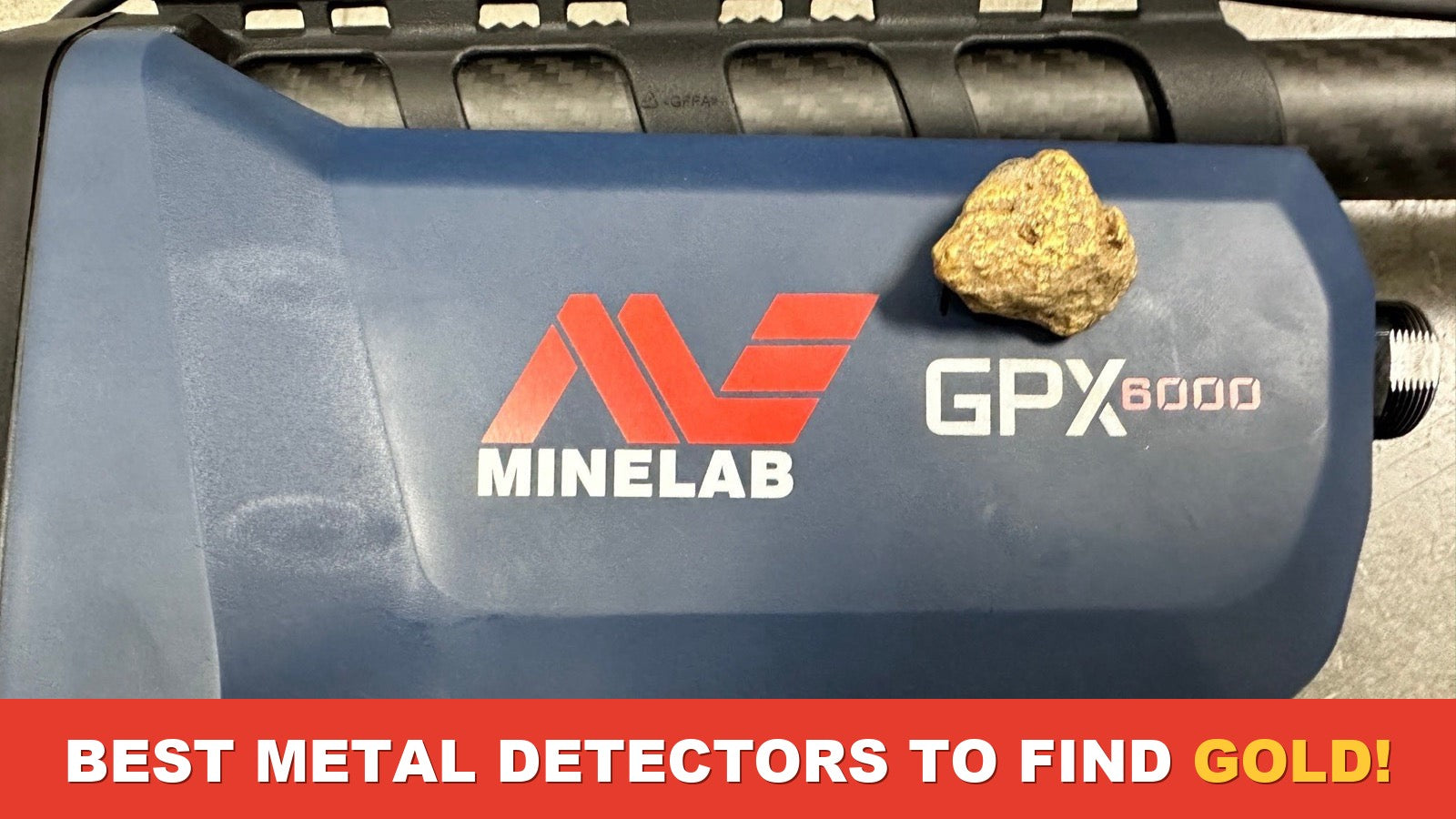
The worst gold ground defeats VLF physics entirely. Pulse induction ignores mineralization, which is why machines like the Minelab GPX 6000 and the compact, submersible SDC 2300 are what full-time prospectors carry, and why the GPZ 7000 and GPZ 8000 keep pulling deep nuggets out of patches that were "worked out" decades ago. Our owner dug a 14.54 gram nugget near Nome, Alaska with a GPX 6000 on the stock 11 in (28 cm) coil; the scale photo is on the listing. These machines are the deep end of the pool: they trade away discrimination and cost real money, and in the right ground they find gold nothing else touches. They live in our Gold Nugget Detectors collection.
Quick reference: gold capability by machine
| Tier | Machines | Gold jewelry | Gold nuggets |
|---|---|---|---|
| Entry | Bounty Hunter line, entry Teknetics, Vanquish, X-Terra, Simplex, Score, Vortex | Yes | No (no prospecting mode) |
| High-frequency crossover | F19, F70, F75, G2+ (19 kHz class) | Yes | Small nuggets in moderate ground |
| Hybrid with gold mode | Manticore, Equinox 900, Legend 2, Deus II | Yes | Yes, real prospecting capability |
| Dedicated VLF | Gold Monster 1000/2000, Goldmaster 24K, Gold Bug, Gold Bug Pro, Gold Bug Tracker, Gold Bug 2 | Yes | Yes, down to sub-gram flakes |
| PI / ZVT | GPX 6000, SDC 2300, GPZ 7000, GPZ 8000, ATX, Magnetar 9000 | Yes | Yes, deepest and in the worst ground |
So which one should you buy?
Be honest about your hunting. If gold means rings at the beach, a waterproof multi-frequency machine is the right tool and a gold machine is the wrong one. If you hunt parks and fields most weekends and gold country once or twice a year, buy a hybrid with a true gold mode and never think about it again. If you live near the goldfields and nuggets are the point, start with a Gold Monster and graduate to pulse induction when the small stuff stops being enough. And if a listing or a name promises gold without a mode, a frequency, or a technology to back it up, keep your money.
Not sure which side of that line you are on? Call us at 256-284-2247 and describe your ground. Everyone here detects, and we would rather point you at the right machine than the expensive one. The story is more important than the artifact.