



Description
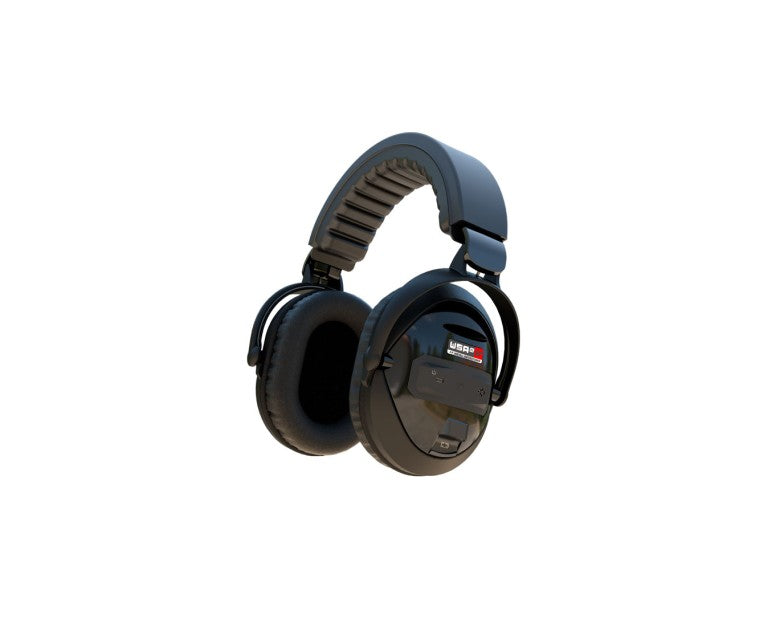
XP ICON with WSA XL ST Over-Ear Headphones: the Entry ICON Under the Headset Built for Long Sessions
Buy the simplest machine on XP's FMF platform, and put it under the headphones you can wear all day. This History Seekers bundle (ICON-28FMFRCWSAXLST) pairs the factory ICON-28FMFRC detector, three factory programs, 4 and 14 kHz single frequencies and the same engine, coil and water ratings as the ICON X, with the WSA XL ST, XP's over-ear wireless headset, instead of the lighter on-ear WSA ST. Two factory-new XP products, an XP-sanctioned pairing, priced at the sum of the two. This page says plainly who it is for, which of the four ICON packages to buy, which settings matter with XP's own ranges and factory values, where it works and where it does not, and what fits it.
At a glance
XP ICON FMF metal detector (factory box ICON-28FMFRC) with WSA XL ST over-ear wireless headphones (WSAXLST). Simultaneous FMF plus 4 and 14 kHz single frequencies; 3 factory and 3 user programs; Reactivity 1 to 5; detector about 735 g (1.62 lb) without the remote on the stem; headphones about 250 g (8.8 oz), rated to 1 m (3 ft); detector 1.5 m (5 ft) on the standard cap, 5 m (16 ft) with the BH-02 and waveguide; about 11 hours per charge for every component. Five-year XP warranty with registration on the detector and the headphones. Made in France.
What Is in the Two Boxes
Bundled by History Seekers from two factory-new XP products, each in its own factory packaging:
- XP ICON detector, factory configuration ICON-28FMFRC: ICON remote control (ICON-RC) with built-in speaker, ICON28 FMF search coil 11 in (28 cm) with coil cover and lower stem (D28FMFIC), blue S-Telescopic Lite stem (D044LITE-B), three-output USB charging cable, documentation
- XP WSA XL ST over-ear wireless stereo headphones (WSAXLST), about 250 g (8.8 oz), rated to 1 m (3 ft), with their own USB-C charging
Not in the boxes: a USB mains adapter (any certified 5 V, 1 A supply), a pinpointer, a pack, the BH-02 or the waveguide. The ICON Adventure Pack is the bundle that adds the pinpointer and the pack.
Who the ICON with WSA XL ST Is For
Best for: coins, jewelry and relics on parks, plowed fields, old homesites and beaches by a hunter who runs long sessions, hunts in cold weather or wants over-ear isolation to hear the faint deep signal and the quiet tone of a thin coin, on the lowest-priced XP FMF machine.
Experience level: beginner to intermediate. XP writes the ICON for both beginners and seasoned detectorists; the WSA XL ST changes comfort and isolation, not the learning curve.
Who should buy something else: if a light on-ear headset suits you, the factory ICON with WSA ST is the one-box configuration; if you already own XP audio, the ICON without headphones; if you want the pinpointer and pack as well, the ICON Adventure Pack. If you hunt iron-heavy relic ground, chase thin coins and fine jewelry, or want all six site programs and the 28 kHz single, the XP ICON X with WSA XL ST bundle is the step up under the same headphones. If you want the full menu, the larger program library and a diving-grade remote, the XP DEUS II is the step up on the same ecosystem. Gold nuggets are the DEUS II GOLD package's job, not this one.
Why the ICON, and What the Numbers Mean in the Field
XP built the ICON range to put its Fast Multi Frequency (FMF) engine, the simultaneous multi-frequency platform of the DEUS II, into a lighter, simpler, fully wireless detector that is ready in three steps: power on, choose a program, start detecting. The ICON is the entry to that platform and it gives up nothing in the engine: the same FMF processing, the same ICON28 coil, the same remote layout and radio link, the same 25 sensitivity levels, the same two water ratings. What XP trims is the menu: 3 factory programs with a user slot behind each, two single frequencies at 4 and 14 kHz, five Reactivity levels from 1 to 5, 1-point resolution in the ferrous zone of the target ID scale, three audio types, and the aluminum S-Telescopic Lite stem. Coil, remote and headphones each carry their own battery and talk over XP's digital radio protocol with about 4 ms of latency across 36 automatic channels, so there is no cable on the stem and nothing to snag. Every figure below is XP's own, from the ICON manual and XP's ICON pages.
| Spec | XP ICON | What it means in the field |
|---|---|---|
| Technology | Simultaneous FMF multi-frequency, 4 to 40 kHz across the programs, automatic frequency scan at every start-up plus manual shift | Stable on wet sand, salt and mineralized dirt that pushes a single-frequency machine around; the scan picks a quiet channel before you swing |
| Single frequencies | 4 and 14 kHz (the ICON X adds 28 kHz) | 4 kHz favors large and high-conductive targets; 14 kHz is the general-purpose single when interference forces you out of FMF |
| Programs | 3 factory programs + 3 user slots, drawn from the platform's six site programs (Field, Trashy Field, Forest, Park, Wet Beach, Beach and Surf); the ICON X carries all six | One program per site type; save your tuned version beside each factory one, and the factory version is always restored at power-on |
| Sensitivity | 0 to 25, factory 24 in every program | Only drop it near power lines, fences, radio relays or other detectors; XP says never test indoors |
| Reactivity | 5 levels, 1 to 5 (the ICON X has 0 to 6) | Low for depth on clean ground, high to separate a ring from the nail beside it; the manual prints a site-by-site table (below) |
| Target ID and discrimination | Conductivity scale -6.4 to 99; Discri -6 to 99 (0 to 99 in beach programs); 1-point ferrous resolution; Multi-Notch with 28 segments and a ferrous bottle-cap filter; automatic Silencer; All-Metal key | Ferrous bottle caps print two segments (about 10 and 60 to 70) so you learn to recognize them; the Notch lets you silence one conductivity window without losing everything below it |
| Tones and audio | Pitch, 2, 3 and 5 tones, Full Tones (350 Hz for foil at TID 30 to 900 Hz for a large silver coin at TID 95); PWM and SQUARE sounds; Stereo Audio Morphing; 3 audio types on XP's standard response curve | Morphing overlays a second sound only on surface targets so depth stays audible; the enhanced response curve that lifts distant targets is an ICON X feature |
| Ground balance | Grab (hold and pump), Tracking, Standard and Pro modes | Pro on a beach program opens the whole ground zone: black sand, ferrite and deep masked targets become audible |
| Pinpoint | True non-motion mode, audio and visual, with manual re-tune | Narrow the field by re-tuning beside the target; also the mode for following a buried pipe |
| Waterproofing | Remote with its standard cap: 1.5 m (5 ft) for 30 minutes; IP68 to 5 m (16 ft) with the BH-02 bone-conduction headphones and the waveguide fitted | Wading, surf and rain on the standard cap; real diving only with the BH-02 connector replacing the cap |
| Battery | LiPo: remote and wireless headphones 365 mAh, coil 700 mAh; about 11 hours each; about 3 hours to charge; one three-output cable charges all three from any certified 5 V, 1 A USB supply | A full day on one charge, one cable in the bag, no proprietary charger to lose |
| Weight and stem | About 735 g (1.62 lb) fully equipped without the remote on the stem; remote about 110 g (3.9 oz); blue S-Telescopic Lite stem about 285 g (10 oz), 58 cm (22.8 in) folded to 130 cm (51.2 in) extended | Light enough for all-day swinging and a long hike in; folds into a daypack |
| Display and connectivity | Sunlight-readable LCD with 0 to 20 backlight; MI-6 connected pinpointer; Go Terrain app with AUTO or PUSH target transmission and GPS mapping | The remote stores several paired coils and switches with one click; a lost MI-6 or lost headphones ring within 25 m even switched off |
| Software | Updates over USB-C through XP's online updater; XP's ICON / ICON X updater covers the remote and the headphones | Remote and headphones must run the same version or the pairing shows KO |
| Warranty | Five years parts and labor, provided the detector is registered at XP's updater site after purchase; batteries and connectors two years; optional extension to ten years | Register the day it arrives; the registration is the condition XP prints in the manual |
ICON vs ICON X: the XP ICON X is the same machine with the ceiling raised: a third single frequency at 28 kHz, all six factory programs with six user slots, Reactivity 0 and 6 at the two ends of the range, 0.5-point ferrous resolution, three more audio types with XP's enhanced response, and a carbon middle stem that trims about 25 g. The engine, coil, radio, batteries and water ratings are identical. XP ICON vs DEUS II: compared with the XP DEUS II, the ICON is the lightest and simplest machine on the same FMF ecosystem: it pairs with the same ST headphones, the same 20 m-rated FMF coils and the same MI-6 pinpointer, while the DEUS II keeps the deeper menu, the larger program library and the diving-grade remote. XP's own line is that the ICON is for both beginners and seasoned detectorists who want performance without a steep learning curve.
ICON Settings That Matter
The ICON is designed to run on its factory programs, and XP's manual says the default parameters are well suited to begin with. The controls below are the ones that change what you find once you leave the defaults; each is printed with its manual range and factory value so you are never guessing. XP's start-of-session order is: choose the program for the site, perform a Grab to calibrate the ground, let the automatic frequency scan finish (it runs at every start-up), then swing. Change one setting at a time and listen to what it did before you touch the next.
- Program first. The ICON ships with three factory programs, each with its own factory defaults, drawn from the platform's six site programs; XP has not published which three in its manual or on its pages, so the names on your remote are the authority, and the defaults below cover whichever three you have. Field: Discri 8, Notch OFF, Audio Type 3, Reactivity 2, for clean land and pastures, and for plowed fields thanks to its removal of soil moisture. Trashy Field: Discri 7, Notch 25, Audio 1, Reactivity 3, highly sensitive, for polluted and mineralized soils and low-conductive targets. Forest: Discri 7, Notch OFF, Audio 3, Reactivity 2, for clean, low-mineralized ground and large deep targets. Park: Discri 8, Notch 10 to 35, Audio 1, Reactivity 3, for coins among aluminum foil and ferrous bottle caps. Wet Beach: Discri 7, Notch 10, Audio 5 on the ICON X (the ICON's three audio types are 1 to 3), Reactivity 1, for dry or wet sand, very sensitive to small targets. Beach and Surf: Discri 7, Notch 10, Audio 2, Reactivity 2, the all-terrain marine program, very stable. Every program ships at Sensitivity 24, FMF, Ground Standard, Tracking OFF, Iron Volume 8.
- Sensitivity (0 to 25, factory 24): reduce it in trashy areas or close to power lines, fences and radio-relay stations, and never test the machine indoors, where electromagnetic interference swamps it.
- Reactivity (1 to 5; the ICON X adds 0 and 6): XP's recovery-speed control. The manual's recommendation, mapped to the ICON's range: 1 for large masses and coins in ground not contaminated by iron; 2 to 3 for general use with little iron; 4 to 5 for iron-contaminated or mineralized ground. On a beach, where targets sit apart, 1 is very efficient; on polluted beaches, magnetic black sand or variable salinity, raise it to 3 or 4. The greatest air-test depth comes at low Reactivity, but you will find more targets and detect deeper on mineralized ground at medium or high settings, so do not judge it in the air.
- Discrimination and Notch (Discri -6 to 99, 0 to 99 in beach programs; Notch OFF or 28 segments): raise Discri to reject everything below the setting (10 rejects small iron, 40 rejects foil). The negative zone -6 to 0 is silent by default because it covers the ground zone and tiny ferrous targets; open it below 0 and the low iron tone stops working. Notch rejects one conductivity window instead; hold the Discri key for two seconds to reach it, or sweep over an unwanted target and hold the key until it goes quiet. Opening the Notch menu activates the ferrous bottle-cap filter (segments 10, 10 to 15 or 10 to 20).
- Iron Volume (0 to 10, factory 8): the volume of the low tone below your Discri setting. 0 cuts iron audio entirely; the manual's approach is to keep hearing it at reduced volume so you know what the ground holds.
- Frequency (FMF, or single 4 or 14 kHz; automatic scan at start-up, or hold the scan key for 2 to 3 seconds): stay in FMF unless a harsh electromagnetic environment or a specific target class calls for a single frequency; 4 kHz favors large and high-conductive targets, 14 kHz is the general single. The 28 kHz small-target single is the ICON X's. Manual frequency shift is available inside the inland programs when interference remains.
- Ground (Grab, Standard or Pro, Tracking ON or OFF): perform a Grab before you start by holding the ground key while pumping the coil until the ground audio fades and the value settles; a short press shows the current value. Standard mode rejects the zone above the ground value and is the recommended default. Pro mode accepts that zone: on an inland program bricks (about 78) and ferrite (about 88) will sound, which XP reserves for experts hunting the deepest masked signals; on a beach program the whole ground zone becomes audible, which is how you hear deep targets in black sand that other detectors mask. Tracking averages the ground continuously and suits uniform mineralization; on old settlement ground with scattered ferrous debris XP tells you to prefer Grab.
- Audio Type (1 to 3; the ICON X has 1 to 6): types 1 and 3 are PWM, XP's traditional dynamic sound; type 2 is SQUARE, softer with fixed harmonics. All three run XP's standard response curve; the enhanced curve that raises distant targets to near the volume of close ones belongs to the ICON X's types 4 to 6. Stereo Audio Morphing keeps the surface cue on every type. Only SQUARE sound is active when the BH-02 is connected.
- Tones (Pitch, 2, 3 or 5 tones, Full Tones): Pitch ignores conductivity and varies pitch and volume with signal strength, which makes the machine feel faster; multi-tones sort targets by conductivity with the lowest tone always on iron; Full Tones assigns a pitch to every target index, 350 Hz for foil at TID 30 up to 900 Hz for a large silver coin at TID 95.
- Pinpoint (non-motion): hold the coil beside the target just off the ground, press to calibrate, then move over it; the strongest, highest-pitched signal is the center of the coil. Re-tune close to the target to narrow the field. The All-Metal key does the opposite job: it temporarily disables Discri and Notch so you hear everything, a quick way to clear an area.
What the target ID and the 5 m rating do not do. The ID is a conductivity reading, not an X-ray: targets rejected by Discri show no ID at all, a bottle cap prints two segments rather than one, and XP's own words are that the display shows deep targets more precisely thanks to multi-frequency processing, not that it names the object. There is no gold-prospecting program on the platform; the "small gold jewelry" zone low on the ID scale is the honest gold story, and that story is jewelry, not nuggets. The 5 m (16 ft) rating belongs to the whole system only with the BH-02 bone-conduction headphones and the waveguide fitted; with the standard cap the remote is rated to 1.5 m (5 ft) for 30 minutes, and the wireless headphones are not dive headphones at any depth. Lock the keypad for diving with a 12-second press of two keys, rinse everything in fresh water after salt before opening the cap, and never detect in a lightning storm.
Where the ICON Works Well, and Where It Does Not
Parks and schoolyards: the Park program exists for exactly this ground, coins among aluminum foil and ferrous bottle caps, with Notch 10 to 35 and Reactivity 3 from the factory. The bottle-cap filter and the two-segment cap signature are the controls that separate the ICON from a beep-and-dig machine here. The honest limit: no detector finds every coin under a nail, and the Target ID is a guide, not a guarantee.
Plowed fields and pastures: the Field program's removal of soil moisture is written for turned earth, and Reactivity 2 keeps depth on relatively clean ground. Drop to Reactivity 1 only where there is no iron; raise Sensitivity back toward 24 as you move away from fence lines.
Old homesites, camps and iron-heavy relic ground: Trashy Field with Reactivity 3 to 5 is the manual's prescription for polluted and mineralized soil, and Iron Volume lets you hear the iron without digging it. Where a site was a settlement, use Grab rather than Tracking, because scattered ferrous debris defeats the averaging. Depth drops as iron density rises; that is physics, not a fault, and this is the ground where the ICON X's Reactivity 6 and 0.5-point ferrous resolution earn their price.
Forest and clean deep ground: the Forest program is tuned for low-mineralized ground and large deep targets with modest ones alongside, and this is where low Reactivity pays. Watch the ID chart's intermediate zone: bricks and ceramic print high in the ground zone and are silent in Standard ground mode.
Dry and wet sand: Wet Beach runs Reactivity 1 and is very sensitive to small targets without losing large or deep ones; the beach programs discriminate from 0 to 99 and the ferrous bottle-cap filter still works in multi-frequency mode.
Surf, salt water and black sand: Beach and Surf is the stable all-terrain marine program. In conductive salt or magnetic black sand raise Reactivity to 3 or 4, and switch Ground to Pro to open the ground zone where deep targets hide at ground-like values. The remote and the ICON28 coil wade on the standard cap to 1.5 m (5 ft) for 30 minutes; the WSA ST and WSA XL ST wireless headphones stay above the water. Rinse the detector in fresh water after salt, and dry the USB-C cap before closing it.
Diving to 5 m (16 ft): only with the BH-02 bone-conduction headphones in place of the cap and the waveguide routed along the stem, keypad locked. This is the configuration XP's IP68 rating describes, and it is a wired configuration: wireless headphones have no place under water.
Where it is the wrong buy: for gold-nugget prospecting, because the ICON has no gold program (XP's small-gold machine is the DEUS II with the GOLD FIELD program and the HF2 coil); for anyone who wants wireless audio under water, which no XP headset offers; for depths past 5 m (16 ft); for the hunter who will tune programs for iron-heavy relic ground, chase thin coins and fine jewelry at 28 kHz or wants a user slot behind every site program, who should buy the ICON X; and for anyone who expects a target ID to name the object before the dig.
Coils, Headphones and Accessories That Fit the ICON
The ICON runs inside XP's FMF ecosystem, and every item below is a product we stock and list on our XP ICON and ICON X fitment page. The remote stores several paired coils and switches between them with a single click; a new coil pairs automatically the first time you put it on charge in pairing mode, with manual serial-number entry as the fallback.
Search coils, in the order the manual suggests you think about them. The ICON ships with the ICON28, an 11 in (28 cm) FMF coil on its own lower stem, the all-round size for parks, fields and beaches. XP's manual lists four DEUS II FMF coils as compatible, each rated waterproof to 20 m (66 ft) and each carrying its own battery: the 9 in (22.5 cm) FMF coil for separation in iron-heavy ground and tight spots, the 11 in (28 cm) FMF coil as a spare or replacement for the one in the box, the 13x11 in (34x28 cm) FMF coil for maximum ground coverage on open fields and beaches, and the HF2 elliptical high-frequency coil, XP's small-gold and micro-jewelry specialist. The coil's 20 m rating is headroom, not an invitation: the detector as a whole is rated to 5 m (16 ft) with the BH-02 and waveguide. XP's X35 and HF coils belong to the original DEUS and the ORX and do not pair with an ICON remote.
Headphones. XP names two current wireless headsets for the ICON range, and both pair to the remote with a 4-second press and switch on and off with it: the WSA ST headphones, the lightweight set XP ships in the ICON WSA ST configuration (about 72 g / 2.5 oz, rainproof, not submersible), and the WSA XL ST over-ear headphones (about 250 g / 8.8 oz, rated to 1 m / 3 ft) for long sessions and cold weather. The remote's built-in speaker and a wired set through the ICON jack adapter are the other outputs; speaker volume and wired-headphone volume are separate paths. Under water the ICON uses the BH-02 bone-conduction headphones, whose waterproof connector replaces the remote's cap and carries the 5 m (16 ft) rating; the DEUS II's BH-01 does not fit the ICON, and the WS6 ST headset-and-control-unit is a DEUS II accessory XP does not list for the ICON. Call 256-284-2247 to order a BH-02 with your detector.
Pinpointer, pack and finds. The XP MI-6 pinpointer is the connected pinpointer the ICON manual describes: pair it to the remote and it switches to its program 7, sends its audio and signal strength to your headphones, shows its battery and target proximity on the remote's screen, and can be made to ring and flash within 25 m if you leave it in a hole, even switched off, even weeks later. The XP Backpack 240 carries the folded ICON (58 cm / 22.8 in) with room for the headphones and pinpointer, the larger XP Backpack 280 adds a rain cover, and the XP Finds Pouch carries the recoveries and holsters the pinpointer.
Frequently Asked Questions
Why the WSA XL ST instead of the WSA ST headphones?
Comfort and isolation over a long day. The WSA XL ST is XP's over-ear wireless headset, about 250 g (8.8 oz) against about 72 g (2.5 oz) for the on-ear WSA ST, with insulating cups that keep wind, surf and traffic out of the faint deep tones and keep ears warm in cold weather. It is rated to 1 m (3 ft) where the WSA ST is rainproof; neither is a dive headset. Both pair to the ICON remote the same way, run about 11 hours and charge in about 3 hours, and both must run the same software version as the remote. If you hunt short sessions in warm weather and want the lightest kit, the factory WSA ST configuration is the better fit.
How does charging work across this bundle?
The detector's three-output cable charges the coil, the remote and a wireless headset at the same time from any certified 5 V, 1 A USB supply; the WSA XL ST charges over USB-C from the same kind of supply with its own cable. Every component runs about 11 hours and charges in about 3 hours; the coil LED stays steady while charging and blinks 4 seconds on, 4 off when full. XP's battery care rule is the same for all of them: store between 40 and 80 percent, never flat or full for months.
Which XP ICON package should I buy?
XP sells the ICON in two factory configurations and History Seekers adds two XP-sanctioned bundles, each a single part number. ICON-28FMFRC is the detector alone: the ICON remote, the 11 in (28 cm) ICON28 FMF coil with cover and lower stem, the blue S-Telescopic Lite stem and the three-output charging cable, with the built-in speaker as your audio; buy it if you already own XP ST headphones or want the BH-02 instead. ICON-28FMFRCWSAST adds the WSA ST wireless headphones in the same factory box, the one-order start for most buyers. ICON-28FMFRCWSAXLST is our bundle of the detector with the WSA XL ST over-ear headphones for long sessions and cold weather. ICON-ADVENTUREPACK is the detector with the WSA XL ST, the MI-6 connected pinpointer and the XP Backpack 240, the complete field kit. Every bundle is priced at the sum of its parts and shipped in the factory boxes. This page is the History Seekers bundle ICON-28FMFRCWSAXLST: the factory ICON-28FMFRC box plus the WSA XL ST over-ear headphones in their own box.
What is the difference between the XP ICON and the ICON X?
ICON vs ICON X: same FMF engine, same ICON28 coil, same remote layout, same wireless protocol, same 25 sensitivity levels, same 5 m (16 ft) rating with the BH-02. The ICON X adds a third single frequency at 28 kHz (the ICON has 4 and 14 kHz), six factory programs with six user slots instead of three and three, seven Reactivity levels from 0 to 6 instead of five from 1 to 5, 0.5-point resolution in the ferrous zone instead of 1 point, six audio types including XP's enhanced response curve instead of three, and a carbon middle stem that brings it to about 710 g (1.57 lb) without the remote against the ICON's about 735 g (1.62 lb). Buy the ICON if you will run factory programs on parks, fields and beaches and want the lowest-priced way onto XP's FMF platform; buy the XP ICON X if you hunt iron-heavy relic ground, chase thin coins and fine jewelry, or know you will tune programs and want every one of the six to work from.
Is the XP ICON waterproof?
Two ratings, and XP prints both. With the standard cap on the remote the ICON is rated to 1.5 m (5 ft) for a maximum of 30 minutes, which covers rain, creeks, wet sand and surf wading. The full IP68 rating of 5 m (16 ft) applies when the BH-02 bone-conduction headphones replace the cap with their waterproof connector and the waveguide is fitted between coil and remote; lock the keypad with a 12-second press before you go under. The WSA ST headphones are rainproof and the WSA XL ST is rated to 1 m (3 ft); neither is a dive headset. Rinse the detector in fresh water after salt or sand, before you open the cap, and dry the USB-C connector cap before closing it.
Can the XP ICON find gold?
Gold jewelry, yes; gold nuggets are not its job. The ICON has no gold-prospecting program among its factory programs, and XP does not market it as a gold machine. What it does have is a "small gold jewelry" zone printed low on the target ID scale and FMF coverage to 40 kHz, enough for thin gold rings and chains in parks and on beaches; the ICON X adds a 28 kHz single frequency that sharpens small low-conductive targets further. For nugget hunting in mineralized ground XP's answer is the DEUS II GOLD package with the GOLD FIELD program and the HF2 elliptical coil; the HF2 coil also pairs with the ICON for micro-jewelry work, without a gold program behind it.
What settings should I change first on the ICON?
Choose the program for the site from the three on your remote (Park for coins in foil and bottle caps, Trashy Field for iron-heavy relic ground, Field for pastures and plowed earth, Forest for clean deep ground, Wet Beach or Beach and Surf for sand and salt, whichever three XP loaded), perform a Grab by holding the ground key while pumping the coil until the value settles, and let the automatic frequency scan finish. Leave Sensitivity at the factory 24 unless power lines, fences or other detectors force it down. Then learn Reactivity 1 to 5: 1 on clean ground for depth, 2 to 3 for general use, 4 to 5 in iron or mineralization, 3 to 4 on black-sand or variable-salinity beaches. Raise Discri only as far as the trash demands, use the Notch for a single pest window, and keep Iron Volume above 0 so you hear what the ground holds. Save your version beside the factory program with a 3-second press; the factory version returns at every power-on, so experimenting costs nothing.
How long does the ICON battery last, and how do you charge it?
About 11 hours each for the remote, the coil and XP's wireless headphones, from built-in LiPo cells (365 mAh in the remote and headphones, 700 mAh in the coil); the remote's life shortens when you run the speaker or the BH-02. A full charge takes about 3 hours over the included three-output cable, which charges coil, remote and headphones at the same time from any certified 5 V, 1 A USB supply, between 0 and 40 C (32 and 104 F). The coil's LED tells you its state: steady while charging, 4 seconds on and 4 off when full. XP says a well-kept LiPo can last ten years: store it between 40 and 80 percent, never flat or full for months. Remote and headphone batteries are replaceable (XP recommends an authorized dealer); the manual gives no user procedure for the coil battery.
Which coils, headphones and accessories fit the ICON?
Coils: the four DEUS II FMF coils XP lists in the manual, the 9 in (22.5 cm), the 11 in (28 cm), the 13x11 in (34x28 cm) and the HF2 elliptical, each rated to 20 m (66 ft) with its own battery; X35 and HF coils are for the original DEUS and ORX and do not pair. Wireless headphones: the WSA ST and the WSA XL ST, which pair with a 4-second press and must run the same software version as the remote. Under water: the BH-02 bone-conduction headphones with their waterproof connector (SQUARE audio only, volume reset to 5 at start-up); the DEUS II's BH-01 does not fit. Pinpointer: the MI-6, which pairs to the remote, plays through your headphones and can be rung from the remote within 25 m. Carry: the XP Backpack 240 or 280 and the XP Finds Pouch. Every one is on our XP ICON and ICON X fitment page.
Does the XP ICON need a software update, and which version?
XP publishes an ICON / ICON X updater that updates the remote control and the wireless headphones over USB-C through its online updater site, and the manual's Update mode is a 4-second hold in the Options menu. As of our November 4, 2026 check XP has published no ICON version log or release notes, so there is no version number to quote; connect the remote to the updater to see whether a newer release exists. One rule matters more than the number: the remote and the headphones must run the same version, and a KO message during headphone pairing means they do not, so update both together. Registering the detector for its warranty happens on the same updater site.
Where can I buy the XP ICON online from an authorized dealer?
Here. History Seekers Metal Detectors is an authorized XP dealer; every ICON we sell is new, comes from XP's authorized US distributor under its factory part number, and carries XP's five-year parts and labor warranty once you register it at XP's updater site after purchase (batteries and connectors two years; an optional extension to ten years is available from XP). The ICON is returnable within 14 days under the History Seekers refund policy. We price match: send us a competitor's current listing for a new unit and we will verify it. Not sure which of the four packages fits you? Call 256-284-2247 and talk to someone who swings one.
Who you are buying from
History Seekers is a small American business and a working detecting channel: over 1.1 million people follow our hunts on Facebook and YouTube. Everyone here detects, from the top down: gold, relics, coins, jewelry, even float copper. We hunt with the gear we sell, and the person who answers your call has real dirt time. Every purchase keeps everyday Americans working.
The story is more important than the artifact.
See everything that fits your machine:What Fits the XP ICON and ICON X